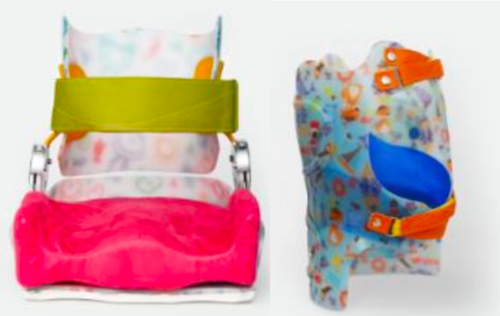
Sitting: A completely different perspective
Whether playing on the floor or eating at the table with the family, sitting enables children to develop their fine motor and cognitive skills. It means that a child can meet other people at eye level and is no longer viewed passively from above. It heralds the end of the infant era. The individual needs of the child must be the focus when choosing the right seating system.
At 9 months, 90% of children have learned to sit freely without a diagnosis. If a child is unable to move to a higher starting position independently by this time, or is unable to remain there in a stable position, it makes sense to consider providing seating support with carefully selected aids.
Sitting has an influence on:
- Social integration and participation
- Change in attention
- Increasing independence
- Improvement of vital functions
- Improving breathing and speech
- Improvement in food intake, mouth and tongue motor skills
- Support for fine motor skills through more variation in play, as hands are not needed for support but can be used for grasping and experiencing
Optimal seat fitting - what to look out for?
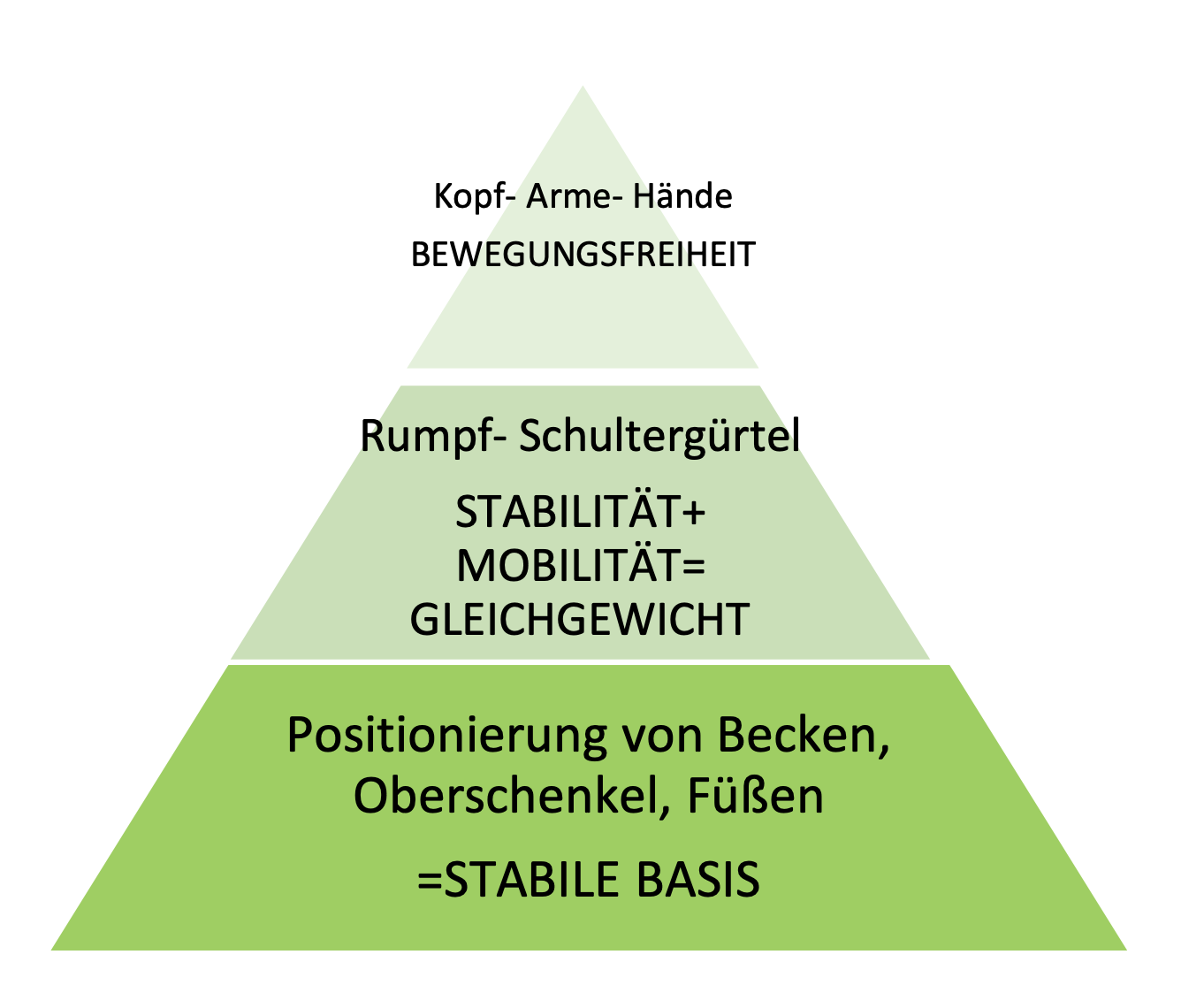
For purposeful, safe movement, we need a stable postural background. Only something that can give way and adapt is truly stable. In this way, posture and movement flow smoothly into one another.
The correct position and good support for the pelvis, thighs and feet form the foundation for stability. This allows the torso to organize itself in an upright position and provides a basis for finely tuned movement of the arms and head.
As much as necessary - as little as possible
A seating aid that does not allow any freedom of movement at all can restrict the range of action just as much as insufficient stability. Arms and shoulders must be able to move freely. When seated, you should be able to move your upper body slightly forwards and to the sides, e.g. to reach objects on the table.
As a general rule, however:
No seating aid is suitable for allowing a child to sit immobile in it for several hours. Freedom of movement and, above all, changing position are absolutely essential for every child!
Key questions in the search for the optimal seating provision:
- When is the right (developmentally relevant) time to start?
- What does the child want to do while sitting?
- How much support does the child really need for an ergonomically relaxed and activity-promoting body position?
- In what context will the aid be used?
- Can the aid be tried out?
Custom-made seat fittings
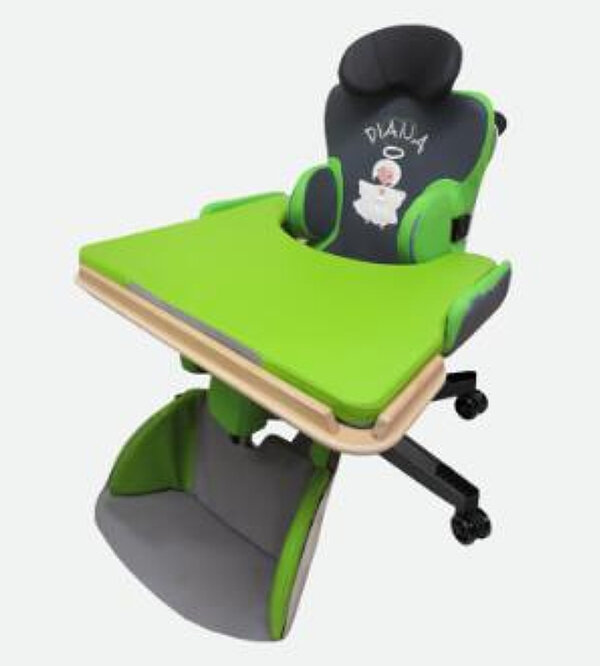
When the prefabricated therapy chair reaches its limits, the individually manufactured seat support offers every possibility.
Seat shells support the physiological sitting posture, compensate for sitting misalignments and instabilities and influence muscle tension. They provide support, but allow the patient as much freedom as possible to take in their surroundings. Each seating system - made to measure or according to an individual vacuum impression - is unique and tailored to the needs and clinical picture of the child to be fitted.
Orthetic fittings to support trunk stability
Sometimes it also makes sense to place the support and stability closer to the body. Orthoses that are worn directly on the body provide the child with support in a wide variety of positions and correct incorrect postures.
In the case of pronounced head and trunk instability, a corset with a seat edge leads to a sorting of the body sections in the gravitational field.
Or a compression soft orthosis provides good sensory feedback and can therefore have a positive influence on posture.
Last but not least, good foot contact is crucial for a safe sitting position. This can also be positively influenced by appropriate foot orthoses.