Drives and pushing aids
When pushing becomes a question of strength
How drives and pushing aids can make everyday family life easier and make new paths possible.
Just a short walk up the hill ... The route is the same as always. Not particularly long, a little incline - nothing that would have been a problem in the past.
And yet it feels different today.
Your hands squeeze harder, your back tenses up, your breathing quickens. And there's this thought that creeps in at some point:
"It used to be easier."
When something changes - and you don't want to admit it for a long time
Children grow. And it's not just their height and weight that change, but also the physical demands of everyday life.
Things that used to be taken for granted gradually become more strenuous: lifting them into the buggy, pushing them over kerbs or up small inclines, longer journeys that suddenly require strength.
Many parents spend a long time trying to cope with this. "It's still possible", they think. And it often works - somehow. Until the body becomes clearer at some point and signals that the limits have been reached.
When the body sets limits
This is a typical situation that many families are familiar with. The back starts to complain after transfers, pushing becomes less safe - especially on uneven terrain or downhill. Routes are deliberately avoided because they have become too strenuous.
At the same time, there is still a strong desire to enable your child to continue to participate - without being restricted by their own weight.
It is precisely at this point that drives and pushing aids can play a decisive role.
What systems are available - and what makes them different
Even though the term "e-drive" is often used in general, it is worth taking a closer look. This is because the term covers different solutions, each of which has its own strengths.
1. pushing aids (support from behind)
They are attached directly to the wheelchair or rehab buggy and actively support the person pushing - especially when pushing, on inclines or over longer distances.
Typical benefits:
- noticeable relief in everyday life, especially outdoors
- Relatively intuitive operation
- Can be easily combined with existing aids
To consider:
- Additional weight on the system
- Battery and technology need to be checked regularly
Particularly suitable for families who push a lot and regularly reach their physical limits in everyday life.
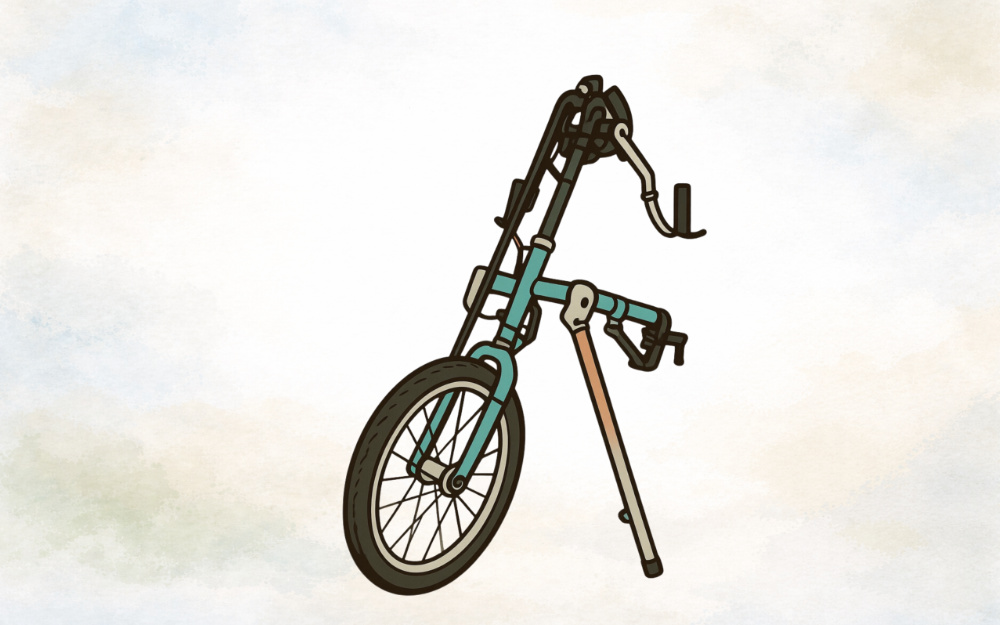
2. traction devices (drive from the front)
These systems are attached to the front and pull the wheelchair or buggy. They are similar in function to a small e-bike.
Typical for this:
- High level of support, even over longer distances
- greater range and speed
- Well suited for excursions and leisure activities
To consider:
- more space required, also for transportation
- Necessary to connect and disconnect in everyday life
Particularly useful for families who travel a lot or cover longer distances.
3. additional electric drives on the wheelchair
Here, the drive is integrated directly into the aid. Depending on the system, it can both support the self-propulsion and make pushing easier.
Typical for this:
- Very integrated, durable solution
- Can also promote the child's independence
- Often "always with you" in everyday life
To consider:
- More complex fitting
- Less flexible between different aids
Particularly suitable if mobility plays a central role in the long term
What really changes in everyday life
The difference is usually not just technical, but also very tangible in everyday life.
Routes that were previously strenuous or unsafe become natural again. Trips no longer have to be planned as much, spontaneous decisions are possible again.
Above all, however, the feeling changes: the focus shifts away from the physical strain and towards the shared experience.
Many parents describe precisely this moment as crucial - when a constant "Can I do this?" turns back into "I can do this."
Finding the right solution
As helpful as the technology is, it has to fit in with everyday life. And this is where it's worth taking a closer look.
It is helpful to consciously take time to ask a few key questions:
- Where do the greatest strains occur in everyday life?
- Which routes are covered regularly?
- Who mainly uses the aid?
- How important is transportation and handling in the car?
One point is always underestimated: no matter how well a system works in everyday life, if it cannot be loaded and unloaded in a practical way, it quickly becomes an additional hurdle.
That's why it's essential to test it in real life - not just in a medical supply store.
The path to fitting
As with many aids, there are several steps involved: Advice, testing, application to the health insurance company and, not infrequently, patience.
The application process in particular can be challenging. Rejections are not uncommon, and sometimes it takes a second attempt.
At the same time, many families report that it is precisely this perseverance that pays off. After all, the relief doesn't just happen one day at a time, but every day.
An emotional step too
In addition to all the practical aspects, the decision to use a drive or push aid is often also an internal process.
It means recognizing that something has changed. That what used to be possible may no longer be possible in the same way today. And that assistance does not mean less independence, but often more quality of life.
Conclusion
When pushing becomes a question of strength, this is not an exception - but a development that many families experience.
Drives and pushing aids can help to manage this transition well. They relieve physical strain, create new scope for action and enable continued participation.
Because in the end, it's not about technology.
It's about staying on the move together.
Tips from the community:
Make sure you try it out - not just in the medical supply store.
A lot of things feel good in the store at first. But it's only on your real routes - with kerbs, inclines or uneven surfaces - that you'll notice whether the support really works in everyday life.
Also think about loading the bike into the car.
In everyday life, it's not just driving that counts, but also everything around it. How heavy is the system? Is it easy to lift, store and remove? This quickly becomes a crucial point.
It's better to find out a little too early than too late.
Many people wait until they can no longer physically manage. It can be totally relieving to look at the options early on - and to find a solution step by step that really suits you.