Care in the bathroom
Individual solutions for personal hygiene
Between routines, aids and the needs of each individual child.
For parents/carers of children with a disability, daily personal hygiene is often associated with challenges. The choice between showering and bathing depends on the individual needs of the child, the living situation and the available aids. Both options offer their own advantages, but the right preparation is crucial.
Shower vs. bathtub
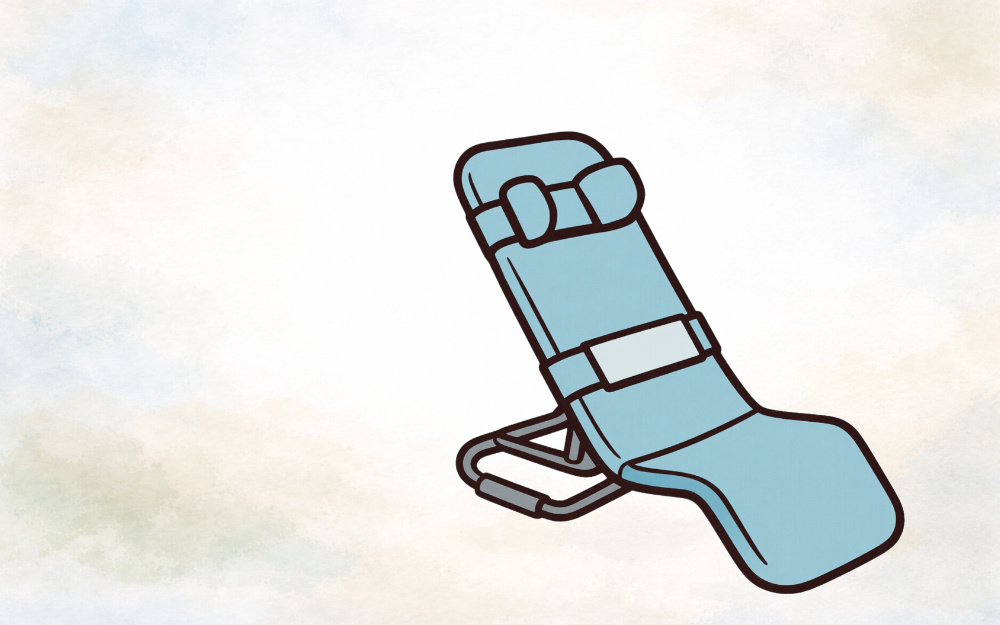
The shower is preferred in many households as it is usually quicker and more practical. Special shower chairs or loungers allow the child to sit comfortably while being washed. For children who cannot stand freely in the shower, but also cannot sit in a chair or lie down on a lounger independently, a lift in the bathroom is very useful. With the help of the lift (ceiling lift or mobile lift), the child can be positioned safely and comfortably.
Anyone who uses a bathtub can also benefit from various aids. A bath lift that gently lifts the child into the bath ensures greater safety and comfort. In many cases, a bath is a very calming and relaxing experience for children, especially those with severe physical limitations. The calming effect of warm water can reduce stress and promote general well-being.
Preparation and follow-up
Preparation in the bath is an essential part of making the care process as stress-free and relaxing as possible. Providing all the necessary care products such as shower gel, shampoo, towels and skin care products ensures smooth care and avoids unnecessary interruptions. The water temperature should also be checked before starting care - digital thermometers or thermostatic taps help to ensure a comfortable and safe temperature.
After washing or bathing, skin care is an important step. Special creams or lotions help to protect the skin from drying out, especially for children with sensitive skin. Some parents swear by natural care products that do not contain fragrances or artificial chemicals to avoid skin irritation.
Lifting in the wet area
One issue that plays a central role for many parents is lifting the child into the wet area. To transport the child safely and comfortably into the shower or bath, there are various lift models - from portable versions to permanently installed ceiling/wall-mounted devices. The use of different lift sheets is particularly practical, so that a subsequent transfer from the care bed back into the wheelchair, for example, can be carried out with an alternative, non-soaked sheet.
For older children, there are also mobile standing and shower aids that support the child in an upright position during the shower. These devices offer excellent flexibility and freedom of movement and help to stabilize the child during care.
Conclusion
Personal hygiene is a very individual part of everyday life - characterized by routines, needs and local possibilities. With the right aids and good preparation, this time can be made not only safer but also more relaxed. Whether it's a shower or bathtub: the key is to find what works best for your child and your situation - for more comfort, less stress and a good feeling during daily care.
There is no one-size-fits-all answer to the question "Shower or bath?" - the decisive factor is what suits your child and your individual circumstances. With the right aids and good preparation, personal hygiene can be made safe, practicable and as pleasant as possible.
Tips from the community:
Routine
A fixed routine really helps our child - always the same sequence, same hand movements.
Relief
The shower chair was a real game changer for us - much less effort and significantly more safety.
Preparation
We have everything ready to hand beforehand - it saves stress and makes the process much more relaxed.
Wavebathing lounger.
We have the wave bathing lounger. It's easy to adjust individually and offers great stability for our son with GMFCS V.
However, it only stands in the bath and unfortunately cannot be moved up and down. As long as our son is still small, we can lift him up easily, but for older children this is certainly no longer an ideal solution.
Nevertheless, we make it as easy as possible for ourselves by sitting in a chair next to the bath when showering and making ourselves as comfortable as possible.
Rifton hts.
We use the hts. from Rifton for showering.
Splashy
We use the Splashy in the bath and also in the shower.
Baby pool
We had Inga's rehab bathing stretcher for our son as he was unable to sit for a long time and at some point it was no longer possible to hold him in his arms while showering. However, he vehemently refused the bathing stretcher and didn't want to be strapped in/restrained there. We therefore found an alternative that we have now been using for over three years: a baby pool in the shower. Our son can now sit in it on his own, but we still have to manage the bathing with two adults (one plays with our child and holds him if necessary, the other applies cream). Nevertheless, I am very glad that aids like the bathing lounger exist
Individual solutions for personal hygiene
Between routines, aids and the needs of each individual child.
For parents/carers of children with a disability, daily personal hygiene is often associated with challenges. The choice between showering and bathing depends on the individual needs of the child, the living situation and the available aids. Both options offer their own advantages, but the right preparation is crucial.
Shower vs. bathtub
The shower is preferred in many households as it is usually quicker and more practical. Special shower chairs or loungers allow the child to sit comfortably while being washed. For children who cannot stand freely in the shower, but also cannot sit in a chair or lie down on a lounger independently, a lift in the bathroom is very useful. With the help of the lift (ceiling lift or mobile lift), the child can be positioned safely and comfortably.
Anyone who uses a bathtub can also benefit from various aids. A bath lift, which gently lifts the child into the bath, ensures greater safety and comfort. In many cases, a bath is a very calming and relaxing experience for children, especially those with severe physical limitations. The calming effect of warm water can reduce stress and promote general well-being.
Preparation and follow-up
Preparation in the bath is an essential part of making the care process as stress-free and relaxing as possible. Providing all the necessary care products such as shower gel, shampoo, towels and skin care products ensures smooth care and avoids unnecessary interruptions. The water temperature should also be checked before starting care - digital thermometers or thermostatic taps help to ensure a comfortable and safe temperature.
After washing or bathing, skin care is an important step. Special creams or lotions help to protect the skin from drying out, especially for children with sensitive skin. Some parents swear by natural care products that do not contain fragrances or artificial chemicals to avoid skin irritation.
Lifting in the wet area
One issue that plays a central role for many parents is lifting the child into the wet area. To transport the child safely and comfortably into the shower or bath, there are various lift models - from portable versions to permanently installed ceiling/wall-mounted devices. The use of different lift sheets is particularly practical, so that a subsequent transfer from the care bed back into the wheelchair, for example, can be carried out with an alternative, non-soaked sheet.
For older children, there are also mobile standing and shower aids that support the child in an upright position during the shower. These devices offer excellent flexibility and freedom of movement and help to stabilize the child during care.
Conclusion
Personal hygiene is a very individual part of everyday life - characterized by routines, needs and local possibilities. With the right aids and good preparation, this time can be made not only safer but also more relaxed. Whether it's a shower or bathtub: the key is to find what works best for your child and your situation - for more comfort, less stress and a good feeling during daily care.
There is no one-size-fits-all answer to the question "Shower or bath?" - the decisive factor is what suits your child and your individual circumstances. With the right aids and good preparation, personal hygiene can be made safe, practicable and as pleasant as possible.
Tips from the community:
Routine
A fixed routine really helps our child - always the same sequence, same hand movements.
Relief
The shower chair was a real game changer for us - much less effort and significantly more safety.
Preparation
We have everything ready to hand beforehand - it saves stress and makes the process much more relaxed.
Wavebathing lounger.
We have the wave bathing lounger. It's easy to adjust individually and offers great stability for our son with GMFCS V.
However, it only stands in the bath and unfortunately cannot be moved up and down. As long as our son is still small, we can lift him up easily, but for older children this is certainly no longer an ideal solution.
Nevertheless, we make it as easy as possible for ourselves by sitting in a chair next to the bath when showering and making ourselves as comfortable as possible.
Rifton hts.
We use the hts. from Rifton for showering.
Splashy
We use the Splashy in the bath and also in the shower.
Baby pool
We had Inga's rehab bathing stretcher for our son as he was unable to sit for a long time and at some point it was no longer possible to hold him in his arms while showering. However, he vehemently refused the bathing stretcher and didn't want to be strapped in/restrained there. We therefore found an alternative that we have now been using for over three years: a baby pool in the shower. Our son can now sit in it on his own, but we still have to use two adults to bathe him (one plays with our child and holds him if necessary, the other applies cream). Nevertheless, I am very glad that aids like the bathing lounger exist