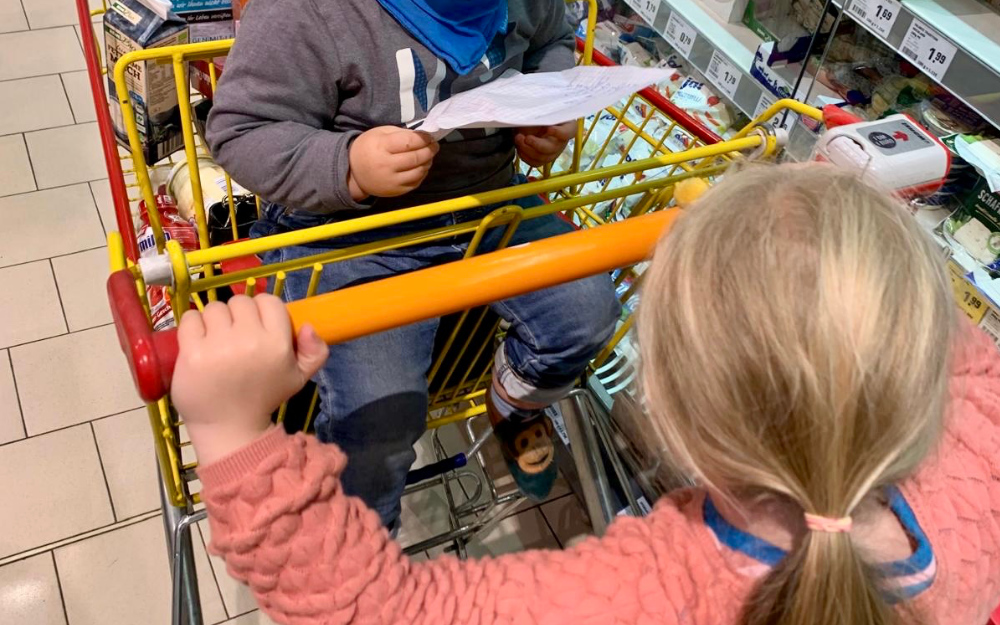
Between the milk shelf and togetherness: how inclusion works in the shopping cart
Tips, aids and ideas for relaxed family moments in the supermarket
Shopping with a child with a disability - stress or opportunity?
Shopping with a child with a disability often sounds like stress instead of everyday life. Narrow aisles, loud noises, bright lights or a lack of barrier-free routes can cause stress for everyone involved. However, with the right preparation, suitable aids and a little patience, a visit to the supermarket can become an enjoyable, shared experience. Here we show you how this can be achieved.
1. good preparation is half the battle
Planning is the be-all and end-all when shopping. If you have the opportunity, you should do your shopping at times when it is quieter in the store - for example in the morning or just before closing time. A fixed shopping list helps to keep an overview and recurring routines provide security. Children then know what to expect and can better adjust to the situation.
It is also worth making a quick call to the supermarket or shopping center in advance: many stores now offer barrier-free entrances, wheelchair-accessible checkouts or special shopping carts. This helps to avoid unpleasant surprises.
2. aids that make shopping easier
Fortunately, there are many practical aids available today that make shopping together easier and more comfortable.
- Shopping carts with a seat shell or holder: Some supermarkets offer special shopping carts for children with disabilities. The Ben's Cart from Wanzl is particularly well known - a trolley with a sturdy seat shell, high backrest, safety belt and side support. The Caroline's Cart, originally developed in the USA, is also increasingly being used in German markets. It offers older or larger children with limited mobility a safe seating option and allows parents to keep an eye on their child. For toddlers who require additional postural and head support, there is the Firefly Go To Shop Cart.
- Mobility aids: Rehab buggies, children's wheelchairs or walking trainers make it easier to get around. It is important that the paths in the store are wide enough and that elevators are easily accessible.
- Noise-reducing headphones: Noise-canceling headphones or earmuffs are a great help for children with auditory hypersensitivity - such as autism or sensory processing disorder.
- Communication aids: Symbol boards, talker apps or simple sign communication help to express wishes and needs. For example, the child can indicate "apple", "break" or "home".
- Other everyday aids: Washable seat covers, hygienic covers for shopping cart seats, shopping bags with wheels or trolleys can make all the difference.
3. organize the shopping together
Children want to be involved - even when shopping!
- Assign small tasks: for example, choosing fruit, putting goods in the trolley or operating the card terminal.
- Build in rewards: A break in the café or a small snack increase motivation and enjoyment.
- Visual support: Photos or pictograms help to structure the process ("First milk - then bread - then checkout") - ideal for children with autism or intellectual disabilities.
4. parent-friendly tips for more serenity
- Avoid time pressure: Better to shop smaller without rushing than a big weekly shop under stress.
- Accept help: Many stores offer assistance - from carrying the shopping to using special checkouts.
- Use accessibility: Disabled parking, automatic doors, wheelchair accessible aisles and adapted toilets are essential.
- Consider online options: Online orders or click & collect offers can be a good alternative and save resources.
5. understanding and raising awareness
Unfortunately, families with children with disabilities sometimes encounter a lack of understanding when shopping. This makes it all the more important to communicate openly and set boundaries in a friendly but firm manner.
At the same time, employees in stores also have a responsibility: training and education about inclusive customer service are important steps towards greater understanding and inclusion.
Conclusion
Shopping with a child with a disability requires planning, patience and sometimes creative solutions. But with the right aids - such as Ben's Cart, Caroline's Cart, rehab buggies, headphones or communication aids - and good time management, shopping can become a valuable everyday experience.
It strengthens the child's independence, promotes participation and demonstrates: Inclusion also begins between the fruit shelf and the checkout.
Tips from the community:
Despite the look
The looks you get when you're out and about with a toddler in a wheelchair are often stressful and exhausting for me. But I still like to go shopping with my child to encourage their independence and see how much fun they have.
GoTo Shop Cart
Another great shopping cart solution is the GoTo Shop Cart from Firefly by Leckey. This shopping cart is also suitable for children who cannot sit stably on their own and have little head control. The GoTo Shop Cart is available from Sunrise Medical. Without adapted shopping carts, children with special needs are often excluded from the shopping experience.
A special shopping cart
In our supermarket, a trolley has been specially purchased for older children with disabilities. This makes shopping with our child much easier.
Tipps, Hilfsmittel und Ideen für entspannte Familienmomente im Supermarkt
Einkaufen mit einem Kind mit Behinderung – Stress oder Chance?
Einkaufen mit einem Kind mit Behinderung – das klingt oft nach Stress statt Alltag. Enge Gänge, laute Geräusche, grelles Licht oder fehlende barrierefreie Wege können Stress für alle Beteiligten bedeuten. Doch mit der richtigen Vorbereitung, passenden Hilfsmitteln und etwas Geduld kann der Supermarktbesuch zu einem schönen, gemeinsamen Erlebnis werden. Wie das gelingen kann, zeigen wir hier.
1. Gute Vorbereitung ist die halbe Miete
Planung ist beim Einkaufen das A und O. Wer die Möglichkeit hat, sollte den Einkauf zu Zeiten erledigen, in denen es ruhiger im Laden ist – etwa am Vormittag oder kurz vor Ladenschluss. Eine feste Einkaufsliste hilft, den Überblick zu behalten, und wiederkehrende Abläufe geben Sicherheit. Kinder wissen dann, was sie erwartet, und können sich besser auf die Situation einstellen.
Auch lohnt sich ein kurzer Anruf im Supermarkt oder Einkaufszentrum vorab: Viele Geschäfte bieten inzwischen barrierefreie Zugänge, rollstuhlgerechte Kassen oder spezielle Einkaufswagen an. So lassen sich unangenehme Überraschungen vermeiden.
2. Hilfsmittel, die das Einkaufen erleichtern
Zum Glück gibt es heute viele praktische Hilfsmittel, die das gemeinsame Einkaufen erleichtern und für mehr Komfort sorgen.
- Einkaufswagen mit Sitzschale oder Halterung: Einige Supermärkte bieten spezielle Einkaufswagen für Kinder mit Behinderung an. Besonders bekannt ist der Ben’s Cart von Wanzl – ein Wagen mit stabiler Sitzschale, hoher Rückenlehne, Sicherheitsgurt und Seitenhalt. Auch der Caroline’s Cart, ursprünglich in den USA entwickelt, wird zunehmend in deutschen Märkten eingesetzt. Er bietet älteren oder größeren Kindern mit eingeschränkter Mobilität eine sichere Sitzmöglichkeit und ermöglicht Eltern, das Kind in Blickkontakt zu behalten. Für Kleinkinder, die eine zusätzliche Haltungs- und Kopfunterstützung benötigen, gibt es den Firefly Go To Shop Cart.
- Mobilitätshilfen: Reha-Buggys, Kinderrollstühle oder Gehtrainer erleichtern die Fortbewegung. Wichtig ist, dass die Wege im Markt breit genug und Aufzüge gut erreichbar sind.
- Geräuschreduzierende Kopfhörer: Für Kinder mit auditiver Überempfindlichkeit – etwa bei Autismus oder sensorischer Verarbeitungsstörung – sind Noise-Cancelling-Kopfhörer oder Ohrenschützer eine große Hilfe.
- Kommunikationshilfen: Symboltafeln, Talker-Apps oder einfache Gebärdenkommunikation helfen, Wünsche und Bedürfnisse auszudrücken. So kann das Kind z. B. „Apfel“, „Pause“ oder „nach Hause“ anzeigen.
- Weitere Alltagshilfen: Abwaschbare Sitzauflagen, Hygienebezüge für Einkaufswagensitze, Einkaufstaschen mit Rollen oder Trolleys können den Unterschied machen.
3. Den Einkauf gemeinsam gestalten
Kinder möchten mitmachen – auch beim Einkaufen!
- Kleine Aufgaben übertragen: Zum Beispiel Obst aussuchen, Waren in den Wagen legen oder das Kartenterminal bedienen.
- Belohnungen einbauen: Eine Pause im Café oder ein kleiner Snack steigern Motivation und Freude.
- Visuelle Unterstützung: Fotos oder Piktogramme helfen, den Ablauf zu strukturieren („Zuerst Milch – dann Brot – dann Kasse“) – ideal für Kinder mit Autismus oder geistiger Behinderung.
4. Elternfreundliche Tipps für mehr Gelassenheit
- Zeitdruck vermeiden: Lieber kleiner einkaufen ohne Hektik als ein großer Wocheneinkauf unter Stress.
- Hilfe annehmen: Viele Märkte bieten Unterstützung an – vom Tragen der Einkäufe bis zur Nutzung spezieller Kassen.
- Barrierefreiheit nutzen: Behindertenparkplätze, automatische Türen, rollstuhlgerechte Gänge und angepasste Toiletten sind essenziell.
- Online-Optionen bedenken: Onlinebestellungen oder Click-&-Collect-Angebote können eine gute Alternative sein und Ressourcen sparen.
5. Verständnis und Sensibilisierung
Leider stoßen Familien mit Kindern mit Behinderung beim Einkaufen manchmal auf Unverständnis. Umso wichtiger ist es, offen zu kommunizieren und freundlich, aber bestimmt Grenzen zu setzen.
Gleichzeitig tragen auch Mitarbeitende in Märkten Verantwortung: Schulungen und Aufklärung über inklusive Kundenbetreuung sind wichtige Schritte zu mehr Verständnis und Inklusion.
Fazit
Einkaufen mit einem Kind mit Behinderung erfordert Planung, Geduld und manchmal kreative Lösungen. Doch mit passenden Hilfsmitteln – wie Ben’s Cart, Caroline’s Cart, Reha-Buggys, Kopfhörern oder Kommunikationshilfen – sowie gutem Zeitmanagement kann der Einkauf zu einer wertvollen Alltagserfahrung werden.
Er stärkt die Selbstständigkeit des Kindes, fördert Teilhabe und zeigt: Inklusion beginnt auch zwischen Obstregal und Kasse.
Tipps aus der Community: