Diapering on the go
Practical solutions for on the go
How inclusive diapering outside the home makes everyday life easier.
Being out and about with your child means freedom, exercise and shared experiences. At the same time, you will encounter everyday issues - one of which is changing nappies on the go. Especially if your child has a disability or needs more care, it is not always immediately clear where and how a dignified diaper change is possible, beyond classic changing tables.
This article aims to encourage you. It shows you what nappy-changing options are available on the go, what inclusive solutions can look like and why preparation, openness and creativity can make your everyday family life noticeably easier.
Thinking ahead starts at home - preparation gives you security
A relaxed outing often starts on the doorstep. If you are well prepared, you can cope with unexpected situations more calmly. In addition to diapers and wet wipes, this includes suitable care products, bin bags for used diapers and, above all, a mobile changing mat or washable blanket.
For many children, a familiar object is also helpful - a small toy or a cloth. It creates closeness and orientation, especially in unfamiliar surroundings. Good preparation is no substitute for a barrier-free infrastructure, but it does give you room for maneuver when changing nappies on the go.
Changing stations on the go - more options than you might think
You won't always find a traditional changing room. Nevertheless, there are often practical changing stations on the go that can be used flexibly.
1. public toilets and accessible toilets
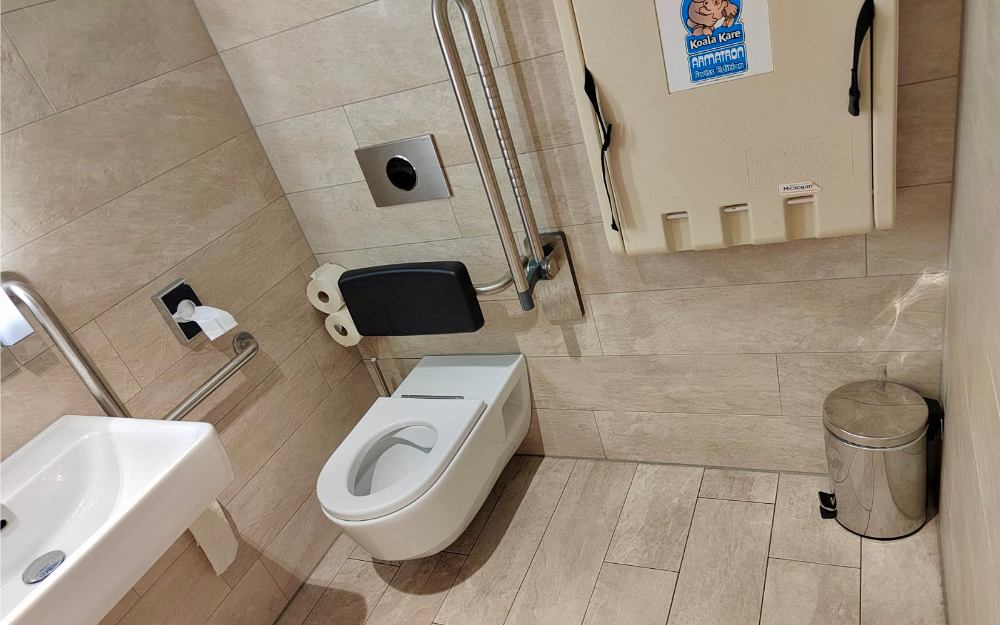
Many cities have accessible toilets that offer more space than conventional facilities. With your own changing mat, you can often find a safe temporary solution here - especially when changing older children.
Toilets for everyone - barrier-free and dignified
So-called "toilets for all" are being built in more and more cities. These specially equipped sanitary facilities are designed to meet the needs of people with disabilities and offer, among other things, a large lying area and often a ceiling or mobile hoist.
For many families with children in need of care, these toilets are a great relief when they are out and about - especially when changing nappies in a confined space is not possible. You can find out where you can find such toilets online at Toilets for everyone and plan trips better.
2. the euro key - self-determined access to toilets
The Eurokey is an important companion when changing on the go with a disability. It gives you access to many barrier-free toilet facilities throughout Europe - including numerous "toilets for all".
The key can be requested by authorized persons and allows you to use suitable sanitary facilities on the go without having to ask or explain your situation. The Euro key saves time, provides security and makes changing nappies more natural, especially if you need to do so spontaneously.
3. changing in the car - a protected space on the road
When traveling, the car often offers you a protected retreat - also for changing nappies. The back seat or trunk can be a practical solution, especially on longer journeys or if there are no suitable changing rooms.
It is important that you park the vehicle safely and have enough space for a quiet, dignified nappy change. A familiar changing mat, some time and as few external distractions as possible will help your child to feel safe. The car can be a reliable changing station on the road, especially for children with increased care needs.
4. changing outdoors - flexible on the go
In good weather, a quiet place outdoors can also be an option. Make sure the surface is clean, the weather is good and there is enough space to protect your child.
It's worth asking
Cafés, family centers or event venues sometimes have unused rooms. Asking nicely opens doors more often than you might expect - and at the same time draws attention to the need for inclusive changing facilities.
Inclusive nappy-changing means: dignity and a matter of course
Changing nappies is part of care and nurturing - and not something you have to justify. Inclusive changing facilities mean that your child can be cared for respectfully, regardless of age or disability.
It also means taking your time, respecting your privacy and involving your child as much as possible. Brief, calm explanations to outsiders can help to relax situations. Understanding often arises where needs become visible.
Hygiene and safety when changing on the go
A separate, clean surface is essential when out and about. Wet wipes, disinfectant wipes if necessary and good hand hygiene will help you to change diapers safely outside of familiar rooms.
If there are no official changing stations on the go, it's better to be self-determined and creative than to compromise on safety or dignity.
Conclusion
Changing nappies on the go is not always easy - but with good preparation, a little flexibility and the knowledge of suitable options, it can be done. Whether it's barrier-free toilets, the car or creative solutions in everyday life: the important thing is that your child can be cared for safely and with dignity. At the same time, every trip shows how important more inclusive infrastructure is - for more naturalness, participation and relaxed family moments on the go.
Tips from the community:
Flexible changing mat
We always have a flexible changing mat with us. This has worked really well for us on the go - whether in the car, in the disabled toilet or outside. A large, easily wipeable mat makes many situations possible in the first place.
Proven changing places
Once we have found a good changing area, we remember it. We have found that it is very relieving to return to tried-and-tested changing stations when we are out and about.
Ask around
It's almost always worth asking nicely. This has worked for us surprisingly often. If we briefly explain our situation, we are often met with understanding and support.
Changing diapers on the go - inclusive thinking
How small solutions bring great relief in everyday life.
Practical solutions for on the go
How inclusive diapering outside the home makes everyday life easier.
Being out and about with your child means freedom, exercise and shared experiences. At the same time, you will encounter everyday issues - one of which is changing nappies on the go. Especially if your child has a disability or needs more care, it is not always immediately clear where and how a dignified diaper change is possible, beyond classic changing tables.
This article aims to encourage you. It will show you what nappy-changing options are available on the go, what inclusive solutions can look like and why preparation, openness and creativity can make your everyday family life noticeably easier.
Thinking ahead starts at home - preparation gives you security
A relaxed outing often starts on the doorstep. If you are well prepared, you can also cope with unexpected situations more calmly. In addition to diapers and wet wipes, this includes suitable care products, bin bags for used diapers and, above all, a mobile changing mat or washable blanket.
For many children, a familiar object is also helpful - a small toy or a cloth. It creates closeness and orientation, especially in unfamiliar surroundings. Good preparation is no substitute for a barrier-free infrastructure, but it does give you room for maneuver when changing nappies on the go.
Changing stations on the go - more options than you might think
You won't always find a traditional changing room. Nevertheless, there are often practical changing stations on the go that can be used flexibly.
1. public toilets and accessible toilets
Many cities have accessible toilets that offer more space than conventional facilities. With your own changing mat, you can often find a safe temporary solution here - especially when changing older children.
Toilets for everyone - barrier-free and dignified
So-called "toilets for all" are being built in more and more cities. These specially equipped sanitary facilities are designed to meet the needs of people with disabilities and offer, among other things, a large lying area and often a ceiling or mobile hoist.
For many families with children in need of care, these toilets are a great relief when they are out and about - especially when changing nappies in a confined space is not possible. You can find out where you can find such toilets online at Toilets for everyone and plan trips better.
2. the euro key - self-determined access to toilets
The Eurokey is an important companion when changing on the go with a disability. It gives you access to many barrier-free toilet facilities throughout Europe - including numerous "toilets for all".
The key can be requested by authorized persons and allows you to use suitable sanitary facilities on the go without having to ask or explain your situation. The Euro key saves time, provides security and makes changing nappies more natural, especially if you need to do so spontaneously.
3. changing in the car - a protected space on the road
When traveling, the car often offers you a protected retreat - also for changing nappies. The back seat or trunk can be a practical solution, especially on longer journeys or if there are no suitable changing rooms.
It is important that you park the vehicle safely and have enough space for a quiet, dignified nappy change. A familiar changing mat, some time and as few external distractions as possible will help your child to feel safe. The car can be a reliable changing station on the road, especially for children with increased care needs.
4. changing outdoors - flexible on the go
In good weather, a quiet place outdoors can also be an option. Make sure the surface is clean, the weather is good and there is enough space to protect your child.
It's worth asking
Cafés, family centers or event venues sometimes have unused rooms. Asking nicely opens doors more often than you might expect - and at the same time draws attention to the need for inclusive changing facilities.
Inclusive nappy-changing means: dignity and a matter of course
Changing nappies is part of care and nurturing - and not something you have to justify. Inclusive changing facilities mean that your child can be cared for respectfully, regardless of age or disability.
It also means taking your time, respecting your privacy and involving your child as much as possible. Brief, calm explanations to outsiders can help to relax situations. Understanding often arises where needs become visible.
Hygiene and safety when changing on the go
A separate, clean surface is essential when out and about. Wet wipes, disinfectant wipes if necessary and good hand hygiene will help you to change diapers safely outside of familiar rooms.
If there are no official changing stations on the go, it's better to be self-determined and creative than to compromise on safety or dignity.
Conclusion
Changing nappies on the go is not always easy - but with good preparation, a little flexibility and the knowledge of suitable options, it can be done. Whether it's barrier-free toilets, the car or creative solutions in everyday life: the important thing is that your child can be cared for safely and with dignity. At the same time, every trip shows how important more inclusive infrastructure is - for more naturalness, participation and relaxed family moments on the go.
Tips from the community:
Flexible changing mat
We always have a flexible changing mat with us. This has worked really well for us on the go - whether in the car, in the disabled toilet or outside. A large, easily wipeable mat makes many situations possible in the first place.
Proven changing places
Once we have found a good changing area, we remember it. We have found that it is very relieving to return to tried-and-tested changing stations when we are out and about.
Ask around
It's almost always worth asking nicely. This has worked for us surprisingly often. If we briefly explain our situation, we are often met with understanding and support.