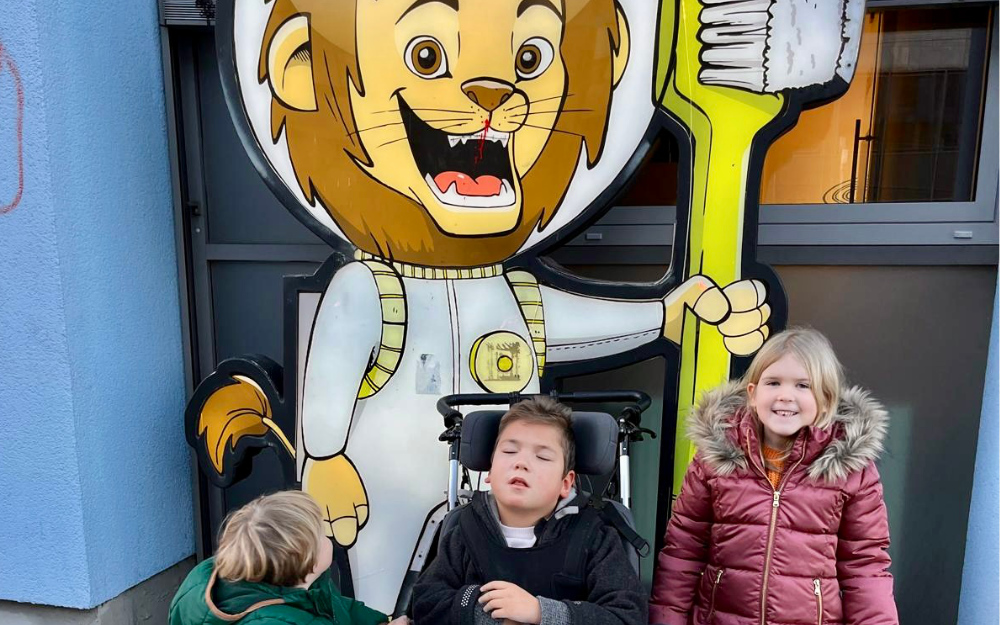
How to Handle a Trip to the Dentist
Visiting the Dentist with a Child with a Disability
What Really Helps Families—From Preparation to Everyday Dental Care
For many children,
a dental appointment isn’t exactly a highlight. When a disability, chronic illness, or increased need for support is added to the mix, a routine visit can quickly turn into a real challenge.
And yet, this very appointment is one of the important building blocks of everyday life. After all, dental health isn’t just a “nice-to-have”—it affects well-being, nutrition, communication, and, in the long term, overall health as well.
So the key question isn’t whether to go.
It’s: How can you make it work for your child?
Why Dental Care Often Doesn’t Just “Happen on the Side”
This is where many families first realize that daily life suddenly requires more organization.
Brushing teeth becomes more difficult. Appointments become more stressful. And many things that seem second nature for other children suddenly require adjustments.
There can be a variety of reasons for this:
- Touching the mouth feels uncomfortable or isn’t tolerated
- Oral motor skills are limited
- The child cannot actively participate
- Medications affect saliva flow or dental health
- Mealtimes are different (soft foods, pureed foods, frequent snacks)
- Sensory overload makes examinations difficult
None of this is an exception—it’s a reality for many families.
The right dental practice makes all the difference
Not every practice is automatically equipped to handle children with special needs. And this is often what determines how relaxed an appointment can be.
It’s worth asking early on and honestly explaining what your child needs.
The team’s attitude is often more important than “perfect facilities”:
- Do they take the time?
- Is the child allowed to arrive at their own pace?
- Are flexible solutions possible (e.g., treatment in a wheelchair)?
- Do they work with you as parents—not over your heads?
If you feel seen as a family, that’s often half the battle.
Preparation: Certainty Instead of Surprises
Many children cope better when they know what’s going to happen.
A clear, simple routine can help:
We’ll drive there—we’ll wait a little while—the dentist will check their teeth—then we’ll go home.
Some families use pictures or short stories. Others keep the lead-up intentionally brief because too much advance notice causes stress.
There’s no “right” or “wrong” here. It’s about figuring out what works for your child.
What Really Helps During the Appointment
Over time, many families develop their very own routine.
Typical things that make a difference:
- Familiar items like a stuffed animal or favorite toy
- Noise cancellation (e.g., headphones)
- Videos or music for distraction
- Communication aids
- Medically necessary equipment (e.g., emergency medication)
Especially for children with complex needs, there’s often no standard procedure. This makes it all the more important to be prepared—and to provide the dental team with the most important information.
When the traditional dental chair isn’t suitable
Not every child can be easily moved. And not every situation allows for standard procedures.
That’s why it’s okay (and advisable) to adapt things:
- Examination in a wheelchair
- Alternative positioning
- Assistance with positioning
- More time for transitions
Often, it’s precisely these small adjustments that turn a difficult appointment into a manageable one.
Dental care doesn’t start at the dentist’s office
The dentist appointment is just a small part of it. Everyday life makes all the difference.
And this is exactly where many families hit a wall.
Brushing teeth might only work for a short while—or not at all the way you’d like.
That doesn’t mean things are going “wrong.”
It just means you need to try a different approach.
The following can be helpful:
- electric toothbrushes that require less effort
- ergonomic handles for a better grip
- short, repeated brushing sessions instead of long routines
- fixed rituals in the daily routine
- Positions that work for both of you
In the end, it’s not about perfect technique. It’s about a solution you can stick with long-term.
When brushing teeth becomes a challenge
There are days when it just doesn’t work out. And that’s part of it, too.
Many families take it step by step:
First, gentle touch—then a brief period to get used to it—then individual movements.
No pressure. No “you have to do it right now.”
Experience shows: Consistency
beats perfection.
Good to Know
For children with disabilities or who require long-term care, there are often additional support services available for dental health and prevention—for example, regular dental cleanings, the costs of which are covered by health insurance.
It’s worth actively asking about these options and working together to determine what makes sense for your individual situation.
Conclusion
A trip to the dentist with a child with a disability is rarely “easy.”
But it can be planned, manageable—and, over time, even more relaxed.
With the right dental practice, realistic expectations, and a few individual adjustments, a routine develops step by step.
And sometimes that’s the greatest success of all:
that it wasn’t perfect.
But it was good enough.
Tips from the Community
We start by just going to the dental office to get there. No
appointment, no treatment. Just to check it out—that takes a lot of the pressure off.
It works much better with music playing. Noises
were the biggest stressor for our child.
We completely rethought our approach to brushing teeth.
No
longer “perfect twice a day,” but rather several short sessions spread out throughout the day.