Playgrounds included
Playing together - naturally inclusive
Why accessible playgrounds are more than just places to run around.
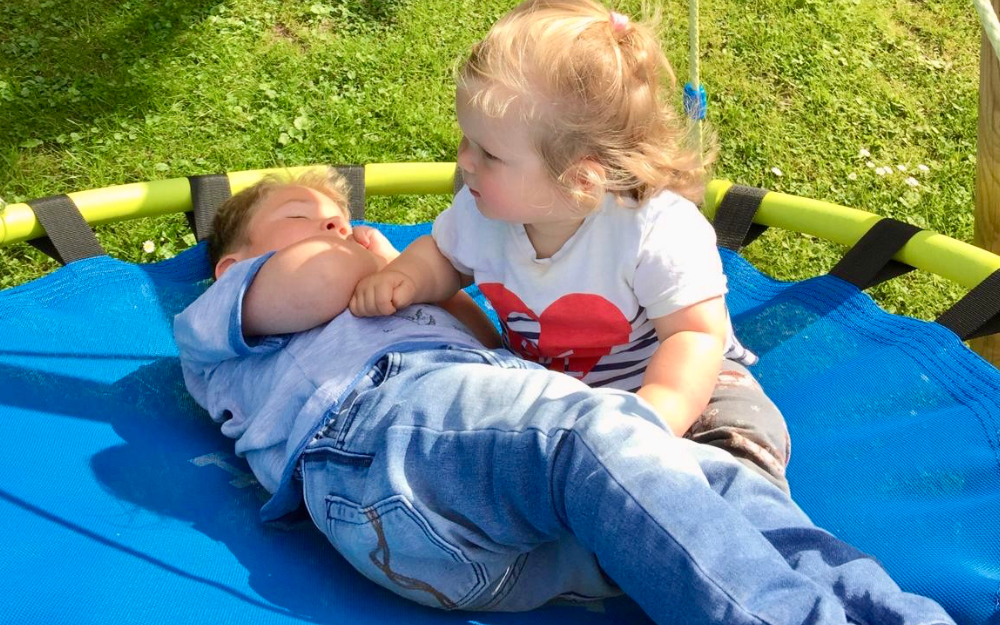
Inclusive playgrounds allow all children, with or without disabilities, to play together and develop in a safe and welcoming environment. But what makes a playground inclusive, for whom are they important, what equipment is used and how can such a playground be designed?
1 Why are inclusive playgrounds important?
Inclusive playgrounds promote coexistence and understanding between children with and without disabilities. They contribute to social integration by enabling children to break down barriers and develop empathy through play and interaction. In an inclusive playground, togetherness is a top priority: All children, regardless of ability, can play, learn and interact together.
The importance of inclusive playgrounds becomes particularly clear when you consider the real challenges faced by children with disabilities. Children with physical, mental or sensory disabilities are often disadvantaged in many public spaces, including most traditional playgrounds. Standard playground equipment designed for the majority of children often does not provide them with the accessibility or safety they need. This is where inclusive playgrounds come into play, as they are specifically designed to provide equal play opportunities for all children.
2 Which children are inclusive playgrounds important for?
Inclusive playgrounds are aimed at children with a variety of disabilities, including
Children with physical disabilities: Children who rely on a wheelchair or struggle with other mobility impairments often have difficulty using traditional playground equipment. For them, barrier-free paths, ramps and adapted play equipment are essential.
Children with intellectual disabilities: Children with cognitive disabilities need play equipment that takes their cognition and abilities into account. This may involve equipment that makes it easier to understand the game or offers sensory experiences.
Children with sensory impairments: Children who are deaf or visually impaired benefit from playgrounds that take their needs into account - be it through tactile surfaces, visual or acoustic signals that engage them in the play situation.
Children with autism: Children with autism often have special needs in the area of sensory integration and social interaction. Inclusive playgrounds offer calming retreats, but also opportunities for communal activities that promote social integration.
Inclusive playgrounds thus create an environment in which all children - regardless of their physical, cognitive or sensory abilities - can be active in their own way.
3. what equipment is available in inclusive playgrounds?
The key to an inclusive playground is equipment that meets the needs of all children. Some examples of such equipment and their features are
Ramps and barrier-free access: instead of stairs or narrow, steep paths, ramps are installed to allow wheelchair users or children with walking aids to access and use the playground.
Combined play equipment: This equipment offers various play options for children with different abilities. For example, combined climbing structures can be accessible to both children who can climb and those who need motor support.
Swings for wheelchair users: Swings designed so that children in wheelchairs can get in and out safely offer the same fun and sense of freedom as conventional swings.
Sensory play equipment: Equipment that responds visually, acoustically or tactilely is particularly important for children with sensory impairments. This includes equipment with lights, music or tactile surfaces that make the playground an experience for all the senses.
Interactive and inclusive sand and water play tables: These not only offer children the opportunity to play together, but also to interact in an inclusive context, e.g. when building castles in the sand or playing with water together.
Equipment that promotes movement: Equipment such as seesaw beams, which are adapted for children with motor skills as well as for children with less physical agility, promote coordination and the shared experience of movement.
4 What helps to ensure that all children can play together?
To ensure that all children - with or without disabilities - can play together in a playground, several aspects must be taken into account:
Accessibility: all paths and equipment must be accessible to children with different disabilities. This includes not only the structural design, but also the removal of obstacles and the consideration of safety requirements that are suitable for all children.
Designing inclusive spaces: Inclusive playgrounds offer not only play equipment, but also places of rest and retreat that allow children with hypersensitivities (e.g. due to autism) to relax in a safe environment when they feel overwhelmed.
Promoting communication and social interaction: Play equipment that encourages children to play together, such as large sandpits, swings or merry-go-rounds, provide opportunities for social interaction. Parents and educators can work together with the children to invent different games that encourage communication and teamwork.
Education and awareness: Parents, caregivers and educators also need to be made aware of the importance of playing together for the social integration of children with disabilities. This includes ensuring that children with disabilities are not only perceived as "special", but as equal play partners.
Conclusion
Inclusive playgrounds are far more than just places to play - they are spaces for encounters, participation and genuine togetherness. They enable children, regardless of their abilities, to gain experience together, make friends and develop freely. This makes inclusion visible and natural in everyday life - right where it begins: playing together.
Tips from the community - Where are the best inclusive playgrounds?
Baden-Württemberg:
Stuttgart-Untertürkheim: Wallmer playground
Stuttgart-Möhringen: Widmaierstraße playground
Stuttgart-Degerloch: Sinneswandel forest trail
Ketsch: Alla Hopp facility
Heidelberg (several locations): Neckarwiese, Alla Hopp facility, The other park
Möglingen: Playground in Wiesenweg
Meßstetten: Blumersberg sports and leisure area
Ostfildern: Trend sports field
Eislingen: Playground in the castle park
Geislingen/Steige: Inclusive exercise park
Künzelsau: Inclusive playground
Schwarzach: Alla Hopp facility
Sinsheim: Alla Hopp facility
Meckesheim: Alla Hopp facility
Illingen-Schützingen: Playground of the Lebensweg family hostel
Freiburg: City garden
Memmingen: Playground at the forest cemetery
Bavaria:
Aschau: at the KIZ
Ingolstadt: Schwarzen Weg
Munich: Playground in Westpark, playground in Olympiapark, playground of the Romanstraße Institute for the Blind
Augsburg: Playground in the "Kühbach" park
Miesbach: Miesbach forest park
Nuremberg: Playground in Nuremberg city park
Regensburg: Inclusive playground in the city park, dragon playground
Würzburg: Playground at the Old Main Bridge
Landshut: Playground in the "Hofgarten"
Fürth: Inclusive playground in Fürth city park
Ingolstadt: Schwarzer Weg playground:
Passau: Playground in Passau city park
Bremen:
Bremen-Gröpelingen: Greifswalder Platz playground
Bremen-Walle: Columbusstraße playground
Brandenburg:
Bad Freienwalde: First barrier-free, inclusive playground
Hamburg:
Hamburg:Playground Onkel Rudi in Markusstraße
Hesse:
Frankfurt (Hausen): Niddapark
Fulda: Park am Aschenberg
Dreieich (Götzenhain): Playground on the Rheinstraße
Karben: Playground next to the sports field in Klein-Karben
Kassel: Wilde Warte culture and adventure playground
Lower Saxony:
Großefehn (Timmel): Inclusive playground at the Timmeler Meer
Hanover: Langensalzastraße playground
Braunschweig: Kaiserstraße playground
Bad Bentheim: Schützenstraße playground
North Rhine-Westphalia:
Bielefeld: Talbrückenstraße playground
Bergneustadt: Talstraße playground
Dortmund-Marten: Barichstraße/Haumannstraße playground
Duisburg: Playground An der Paulskirche
Düsseldorf: Playground at the Regenbogenland children's hospice
Cologne-Porz: Ohmstraße playground
Schleswig-Holstein:
Kellenhusen: Playground directly on the beach
Fehmarn: Dänschendorf
Saxony:
Chemnitz: Rößlerstraße playground
Playing together - naturally inclusive
Why accessible playgrounds are more than just places to run around.
Playing together - naturally inclusive
Why accessible playgrounds are more than just places to run around.
Inclusive playgrounds allow all children, with or without disabilities, to play together and develop in a safe and welcoming environment. But what makes a playground inclusive, for whom are they important, what equipment is used and how can such a playground be designed?
1 Why are inclusive playgrounds important?
Inclusive playgrounds promote coexistence and understanding between children with and without disabilities. They contribute to social integration by enabling children to break down barriers and develop empathy through play and interaction. In an inclusive playground, togetherness is a top priority: All children, regardless of ability, can play, learn and interact together.
The importance of inclusive playgrounds becomes particularly clear when you consider the real challenges faced by children with disabilities. Children with physical, mental or sensory disabilities are often disadvantaged in many public spaces, including most traditional playgrounds. Standard playground equipment designed for the majority of children often does not provide them with the accessibility or safety they need. This is where inclusive playgrounds come into play, as they are specifically designed to provide equal play opportunities for all children.
2 Which children are inclusive playgrounds important for?
Inclusive playgrounds are aimed at children with a variety of disabilities, including
Children with physical disabilities: Children who rely on a wheelchair or struggle with other mobility impairments often have difficulty using traditional playground equipment. For them, barrier-free paths, ramps and adapted play equipment are essential.
Children with intellectual disabilities: Children with cognitive disabilities need play equipment that takes their cognition and abilities into account. This may involve equipment that makes it easier to understand the game or offers sensory experiences.
Children with sensory impairments: Children who are deaf or visually impaired benefit from playgrounds that take their needs into account - be it through tactile surfaces, visual or acoustic signals that engage them in the play situation.
Children with autism: Children with autism often have special needs in the area of sensory integration and social interaction. Inclusive playgrounds offer calming retreats, but also opportunities for communal activities that promote social integration.
Inclusive playgrounds thus create an environment in which all children - regardless of their physical, cognitive or sensory abilities - can be active in their own way.
3. what equipment is available in inclusive playgrounds?
The key to an inclusive playground is equipment that meets the needs of all children. Some examples of such equipment and their features are
Ramps and barrier-free access: instead of stairs or narrow, steep paths, ramps are installed to allow wheelchair users or children with walking aids to access and use the playground.
Combined play equipment: This equipment offers various play options for children with different abilities. For example, combined climbing structures can be accessible to both children who can climb and those who need motor support.
Swings for wheelchair users: Swings designed so that children in wheelchairs can get in and out safely offer the same fun and sense of freedom as conventional swings.
Sensory play equipment: Equipment that responds visually, acoustically or tactilely is particularly important for children with sensory impairments. This includes equipment with lights, music or tactile surfaces that make the playground an experience for all the senses.
Interactive and inclusive sand and water play tables: These not only offer children the opportunity to play together, but also to interact in an inclusive context, e.g. when building castles in the sand or playing with water together.
Equipment that promotes movement: Equipment such as seesaw beams, which are adapted for children with motor skills as well as for children with less physical agility, promote coordination and the shared experience of movement.
4 What helps to ensure that all children can play together?
To ensure that all children - with or without disabilities - can play together in a playground, several aspects must be taken into account:
Accessibility: all paths and equipment must be accessible to children with different disabilities. This includes not only the structural design, but also the removal of obstacles and the consideration of safety requirements that are suitable for all children.
Designing inclusive spaces: Inclusive playgrounds offer not only play equipment, but also places of rest and retreat that allow children with hypersensitivities (e.g. due to autism) to relax in a safe environment when they feel overwhelmed.
Promoting communication and social interaction: Play equipment that encourages children to play together, such as large sandpits, swings or merry-go-rounds, provide opportunities for social interaction. Parents and educators can work together with the children to invent different games that encourage communication and teamwork.
Education and awareness: Parents, caregivers and educators also need to be made aware of the importance of playing together for the social integration of children with disabilities. This includes ensuring that children with disabilities are not only perceived as "special", but as equal play partners.
Conclusion
Inclusive playgrounds are far more than just places to play - they are spaces for encounters, participation and genuine togetherness. They enable children, regardless of their abilities, to gain experience together, make friends and develop freely. This makes inclusion visible and natural in everyday life - right where it begins: playing together.
Tips from the community - Where are the best inclusive playgrounds?
Baden-Württemberg:
Stuttgart-Untertürkheim: Wallmer playground
Stuttgart-Möhringen: Widmaierstraße playground
Stuttgart-Degerloch: Sinneswandel forest trail
Ketsch: Alla Hopp facility
Heidelberg (several locations): Neckarwiese, Alla Hopp facility, The other park
Möglingen: Playground in Wiesenweg
Meßstetten: Blumersberg sports and leisure area
Ostfildern: Trend sports field
Eislingen: Playground in the castle park
Geislingen/Steige: Inclusive exercise park
Künzelsau: Inclusive playground
Schwarzach: Alla Hopp facility
Sinsheim: Alla Hopp facility
Meckesheim: Alla Hopp facility
Illingen-Schützingen: Playground of the Lebensweg family hostel
Freiburg: City garden
Memmingen: Playground at the forest cemetery
Bavaria:
Aschau: at the KIZ
Ingolstadt: Schwarzen Weg
Munich: Playground in Westpark, playground in Olympiapark, playground of the Romanstraße Institute for the Blind
Augsburg: Playground in the "Kühbach" park
Miesbach: Miesbach forest park
Nuremberg: Playground in Nuremberg city park
Regensburg: Inclusive playground in the city park, dragon playground
Würzburg: Playground at the Old Main Bridge
Landshut: Playground in the "Hofgarten"
Fürth: Inclusive playground in Fürth city park
Ingolstadt: Schwarzer Weg playground:
Passau: Playground in Passau city park
Bremen:
Bremen-Gröpelingen: Greifswalder Platz playground
Bremen-Walle: Columbusstraße playground
Brandenburg:
Bad Freienwalde: First barrier-free, inclusive playground
Hamburg:
Hamburg:Playground Onkel Rudi in Markusstraße
Hesse:
Frankfurt (Hausen): Niddapark
Fulda: Park am Aschenberg
Dreieich (Götzenhain): Playground on the Rheinstraße
Karben: Playground next to the sports field in Klein-Karben
Kassel: Wilde Warte culture and adventure playground
Lower Saxony:
Großefehn (Timmel): Inclusive playground at the Timmeler Meer
Hanover: Langensalzastraße playground
Braunschweig: Kaiserstraße playground
Bad Bentheim: Schützenstraße playground
North Rhine-Westphalia:
Bielefeld: Talbrückenstraße playground
Bergneustadt: Talstraße playground
Dortmund-Marten: Barichstraße/Haumannstraße playground
Duisburg: Playground An der Paulskirche
Düsseldorf: Playground at the Regenbogenland children's hospice
Cologne-Porz: Ohmstraße playground
Schleswig-Holstein:
Kellenhusen: Playground directly on the beach
Fehmarn: Dänschendorf
Saxony:
Chemnitz: Rößlerstraße playground