Swimming pool visit
Into the water together
What swimming can mean for families with a special child.
Swimming is not only fun, it also develops the motor skills, sensory abilities and self-confidence of your child with a disability. Find out more about the benefits of going to the pool together and the aids that will make your visit an enjoyable and safe experience.
Benefits for your child
- Physical fitness: Swimming is an activity that is easy on the joints, strengthens the muscles and improves endurance. This can be particularly important for children with disabilities as they often have limited mobility. The water provides resistance that gently exercises the muscles. At the same time, the weightlessness in the water is a pleasant sensory experience.
- Improvement of motor skills: Swimming allows children to improve their coordination and balance. Activities in the water promote the development of motor skills and help to train body awareness.
- Therapeutic effects: Swimming is increasingly being recognized as a therapeutic intervention. In many cases, it is used in combination with physiotherapy exercises. The properties of water - such as buoyancy and resistance - enable therapists to carry out targeted exercises that are adapted to the individual needs of the child. Water therapy is often used to treat muscle tension, pain and improve mobility. Water also has a calming effect and can help to reduce stress and anxiety.
- Social interaction: Swimming offers the opportunity to interact with other children. This promotes social skills and self-confidence. In an inclusive swimming course, for example, children - as well as the accompanying parents - can make new friends.
Benefits for the family
- Time together: Swimming is an activity that can involve the whole family. Visiting the pool or lake together strengthens family bonds and creates great memories.
- Promoting understanding: When families swim together, they can develop a better understanding of the child's needs and abilities. This can lead to a stronger emotional bond and boost the child's self-esteem.
Aids for swimming
In the following, we will introduce you to various aids that can make a visit to the swimming pool with a child with a disability a safe and enjoyable experience.
1. swimming aids
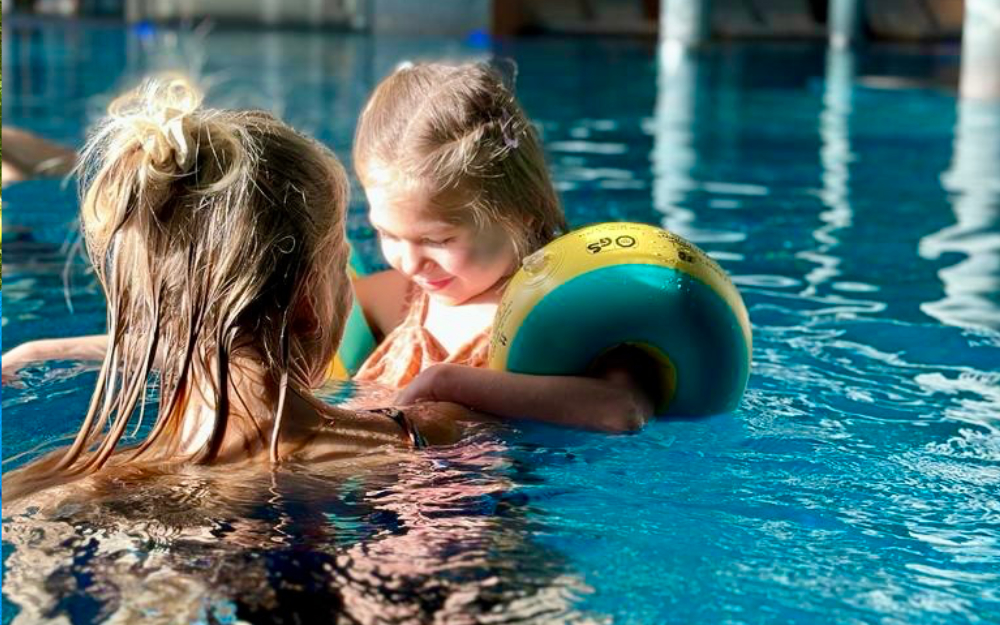
- Water wings: These are inflatable aids that are worn on the upper arms. They provide buoyancy and help children to feel safer in the water while learning to swim.
- Life jackets: These are particularly useful for children who are not yet able to swim or need extra support. They provide more buoyancy than water wings and are often fitted with a safety buckle. For children with epilepsy, there are special life jackets with an inflatable collar that prevents the child's head from coming into contact with water in the event of a seizure.
- Buoyancy rings: These round, inflatable rings can help children stay in the water and feel safer. They are ideal for younger children or those who are not yet able to move safely in the water.
- Swimming boards and pool noodles: These boards and pool noodles can be used as support while swimming. Children can lean on them while moving their legs, which promotes coordination and confidence in the water.
2. seating and mobility aids
- Swim seats: These special seats are designed for children with motor impairments. They provide stability and support so that the child can sit and move in the water. A life jacket should also be worn to provide the best possible protection for the child.
- Water wheelchairs: These wheelchairs are often made of stainless steel or special plastics that are resistant to corrosion. This prevents damage from chlorine or salt water. They are lightweight and often have large, wide wheels that make them easier to drive on uneven terrain, such as on the beach or at the edge of a swimming pool. Many models are equipped with padded seats that are also comfortable in the water.
3. safety equipment
- Safety harnesses: These harnesses can be attached to life jackets or buoyancy aids to prevent slipping or sinking. They provide additional safety, especially for children who cannot hold themselves up in the water.
- Swimming goggles: These help protect the eyes from chlorine and water and allow children to see better while swimming. They are particularly useful for children who have sensitive eyes or wear contact lenses, for example. .
4 Accessible facilities
- Accessibility: Many swimming pools offer ramps or lifts that allow children with mobility impairments to enter the water safely. Water wheelchairs can often be pushed directly into the water.
- Changing rooms and showers: Accessible changing rooms and showers are important to make a visit to the pool as comfortable as possible for children with disabilities. These facilities should offer sufficient space and be equipped with grab rails or a ceiling lift system as well as height-adjustable loungers.
- Transfer aids: Special transfer aids are available in some swimming pools to make it easier to transfer from a wheelchair into the water.
5. toys and learning aids
- Water toys: Special water toys that are suitable for children with disabilities can make swimming fun. These include floating balls, cups or other toys that promote motor skills.
- Swimming courses with adapted lessons: Many swimming schools offer special courses for children with disabilities that cater to their individual needs. These courses often use aids to support learning.
6. incontinence products
- Swim di apers: Swim diapers are specially designed for use in water. They are lightweight, waterproof and prevent urine and bowel movements from leaking into the water. They are available in different sizes and offer a comfortable fit.
- Incontinence underwear: These products are designed like normal underwear, but offer additional protection against urine leakage. They are available in different sizes and designs to suit children's needs. They are discreet and offer a sense of normality as they look like regular underwear.
- Waterproof overpants: These overpants can be worn over swim diapers or incontinence underwear. They are made of waterproof material and prevent liquids from leaking out. They are available in different colors and designs, which makes them more attractive for children to wear.
- Special swimwear: Some manufacturers offer special swimsuits or swim shorts that are equipped with integrated incontinence products. These are designed to be both functional and fashionable. They promote the child's self-confidence as they look like normal swimwear.
Conclusion
Swimming can be much more than just leisure for families with a special child - it means ease, shared experiences and valuable developmental steps. With the right aids and good preparation, spending time in the water is safe, relaxed and accessible for everyone. This creates moments in which the focus is not on restrictions, but on shared experiences, joy and a feeling of freedom.
Tips from the community:
Swimming aid
We use a swimming boat so that our son can lie in it completely relaxed.
Preparation
We always have an incontinence swimsuit with us when we go swimming.
Equipment
We always take swimming pampers and a mat to relax on when we visit the pool.
Safety
Our swimming noodle and a life jacket are a must on our swimming trips.
Accessibility
At www.schwimmbadlift er.de you will find a list of swimming pools that offer lifts for barrier-free access to the water.
Recommendation
We can recommend Wiehler Wasser Welt. As a family, we really appreciate the changing rooms there for families and people with disabilities. When we visit the pool, we are only faced with the question of how to secure our wheelchair in the changing room against damage and theft.
Solution
We take the wheelchair with us into the swimming area and shower off the wheels beforehand. Alternatively, covers for the wheels also help.
Practicality
We also take the wheelchair into the swimming pool as important aids are attached to it. We use disinfectant to clean the wheels.