Therapy bikes
On the road with the therapy bike
When mobility combines participation and family time.
For many families, cycling is a natural part of everyday life: a trip at the weekend, the way to the playground or simply a ride around the block. For children with physical, mental or sensory impairments, however, this form of exercise is often not easily possible. This is exactly where therapy bikes come in. They create mobility, promote independence and enable real participation in family life.
What are therapy bikes?
Therapy bikes are specially adapted bikes that are individually tailored to the needs of children (and young people) with disabilities. Depending on the design, they offer additional stability, special seating systems, back and headrests, belts, foot fixations or an adapted pedaling, steering and braking mechanism. The aim is always to provide a safe riding experience that combines movement, development and participation.
What types of therapy bikes are there?
There is a large selection of therapy bikes. Which type is suitable depends largely on the child's motor skills, posture, need for support and everyday goals.
Therapy tricycles
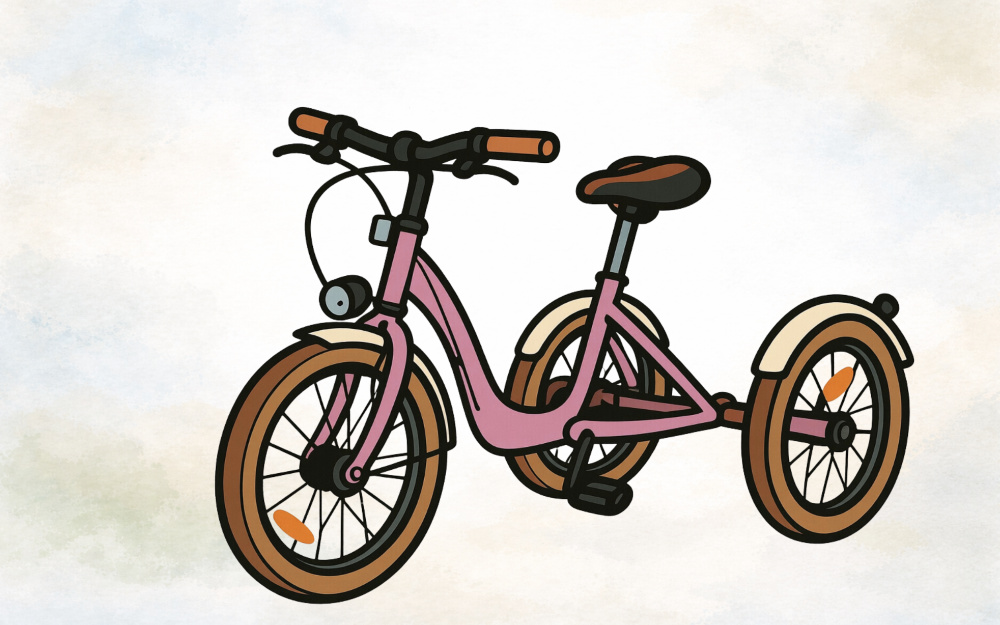
These are among the most commonly used models. Thanks to their three wheels, they offer a high level of stability and are particularly suitable for children with balance or coordination problems. Many models can be equipped with seat shells, harnesses or push bars.
Adapted two-wheelers
There are adapted two-wheelers for children who can generally ride a bike but need additional support. They promote independence and enable a very active riding experience - with aids such as training wheels, special steering or pedal fixations.
Tandems and ride-along models
With these variants, an accompanying person actively rides along. The child can pedal along themselves or ride passively. Tandems are ideal if the child's stamina, safety or attention levels are not yet sufficient to ride alone - making family outings together possible.
Push bikes and semi-active models
These bikes enable movement even if a child cannot pedal or steer independently. Parents or accompanying persons push or steer the bike while the child sits safely and - depending on the model - is actively involved.
Electrically assisted therapy bikes
Electric assistance can help to cover longer distances or compensate for differences in strength. This is particularly helpful in everyday family life or when touring with siblings.
Wheelchair-bike combinations
With these models, a wheelchair is fixed at the front or between the wheels. This means that children who are permanently dependent on a wheelchair can also take part in joint bike excursions.
More than just exercise: Why therapy bikes are so valuable
Therapy bikes are much more than just a means of transportation.
Physical stimulation
Cycling trains muscle strength, endurance, coordination and balance - without the classic therapeutic character.
Experience self-efficacy
Riding independently or with support boosts self-confidence and promotes personal initiative.
Participation in everyday family life
Whether it's an excursion, a vacation or a trip to the ice cream parlor: With a suitable therapy bike, children can be actively involved and share experiences together.
Therapy bikes as an aid
Therapy bikes can be prescribed as medical aids. Costs can be covered by health insurance if there is a medical necessity and the bike helps to promote development or participation.
Important for parents:
- Medical prescription and professional justification
- Focus on everyday life, participation and development goals
- Individual adaptation and testing of the bike
For tips on reimbursement and application, please refer to our expert tip on therapy bikes.
Conclusion
Therapy bikes open up new areas of movement for children - physically, socially and emotionally. They combine therapy with leisure, promote independence and enable families to actively shape their everyday lives together. This makes them an important building block for inclusion in practice.
Tips from the community:
This is what our family day with a therapy bike looks like
At the weekend, the therapy bike is a matter of course for us. After breakfast, we often go for a short ride through the park, and later we go to the playground together. While we parents walk or cycle ourselves, our son is actively involved - not as an exception, but right in the middle. The therapy bike gives our day structure, movement and, above all, lightness.
Tips for cycling together with siblings
It works best when everyone has a common destination: an ice cream, a playground or a small forest path. We adjust the pace and prefer to plan shorter routes with breaks. It is important to us that no child feels slowed down - neither the child with the therapy bike nor their siblings. This turns our bike tours into a real community experience.