Infection time
Challenges during the cold season
How families can get through the winter well.
Children are particularly susceptible to infections, such as respiratory infections, during the cold season. For parents of children with disabilities, this time can be particularly challenging. Not only are the child's health needs more complex, but care and nursing often have to be adapted. In order to be well prepared in the event of an infection, we have put together some tips below.
What parents should always have at home
In many cases, it makes sense to have a well-stocked first-aid kit at home. This can contain not only the necessary medication, but also important aids for the care and symptomatic treatment of infections. These include, for example
Clinical thermometer: Monitoring body temperature is particularly important for children with disabilities, as they are often less able to signal pain or discomfort. A thermometer that measures body temperature on the forehead or in the ear is often the most comfortable for children.
Nasal aspirator: A nasal aspirator is a useful aid to clear a blocked nose and make breathing easier, especially for children who are restricted in their breathing or oral motor skills due to a disability.
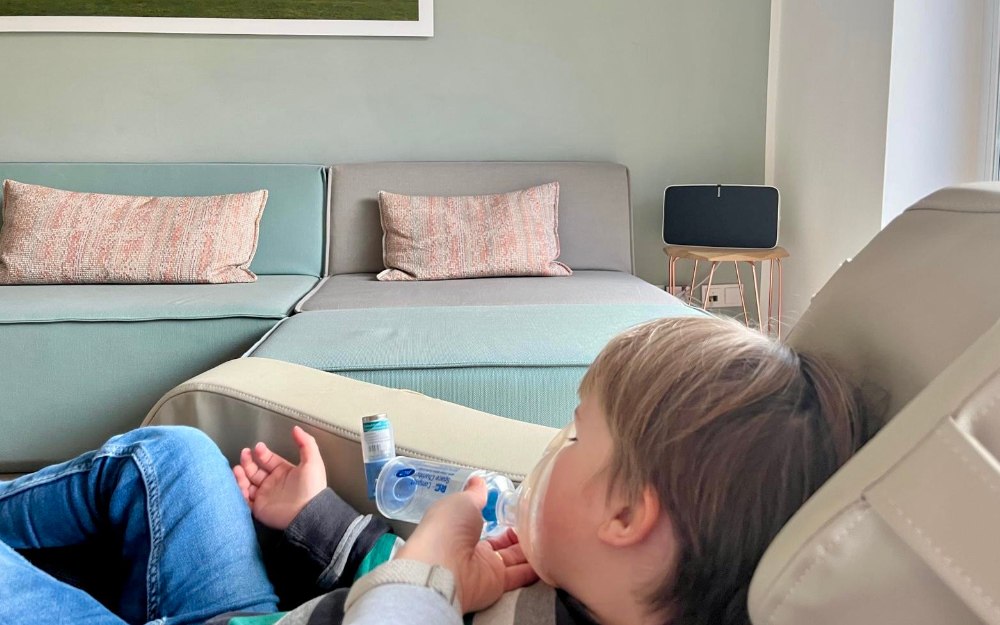
Inhaler or nebulizer: For children with respiratory conditions such as asthma or chronic lung problems, an inhaler can help to keep the airways clear and alleviate discomfort.
Cough Assist: Children who are unable to cough up secretions on their own benefit from a Cough Assist, which mechanically triggers a coughing stimulus.
Disinfectant and gloves: To prevent the spread of germs, disinfectant and disposable gloves should always be available.
Care box: Many parents of children with disabilities decide to regularly order a care box. These boxes often contain not only gloves and disinfectant, but also specific tools tailored to the child's needs. They offer a practical way of ensuring that everything is to hand in the event of illness or emergencies. Care boxes are offered either directly by health insurance companies, specialist providers or as a subscription service and can be customized according to need.
Drinking aids: Children with an upper respiratory tract infection often have difficulty drinking. Special drinking cups are available to make it easier for them to drink independently.
Buffer mattresses or positioning aids: For children who are in bed for long periods of time due to an infection, a suitable mattress or special positioning aids can help to prevent pressure points and ensure a comfortable resting position.
Oxygen equipment: Children with breathing difficulties or lung disease may need a portable oxygen device that can be used if necessary, for example if oxygen saturation is too low.
Pulse oximeter: During an infection, monitoring of vital signs, such as oxygen saturation and heart rate, is often indicated. A pulse oximeter provides security here.
Special baby foods or tube feeds: If the child has difficulty eating, special foods or feeding tubes are required.
to the aids for respiratory therapy
Conclusion
The cold season brings additional challenges for many families - especially if a child has special health needs. Good preparation can be crucial here: With the right aids, a well thought-out medicine cabinet and a clear plan, many situations can be dealt with safely and more calmly.
Above all, it is important to make provisions at an early stage and find individual solutions. This gives families more security in everyday life and allows them to react more calmly during the cold season - for more stability, relief and a good feeling when dealing with infections.
Tips from the community:
Space chamber, nebulizer, oxygen compressor, Cough Assist
For respiratory infections, we use a space chamber to administer medication. We also inhale table salt with a nebulizer from beurer. An oxygen compressor compensates for any drops in saturation during the night. Our Cough Assist is a must-have when a coughing fit comes on.
Toniebox
In addition to all the medicines and aids, books and the Toniebox are indispensable for us. We cuddle up on the sofa or in the nursing bed and pass the time until we get well by reading and listening to radio plays.
PARI BOY
We always have the PARI BOY to hand when we have an infection.
Fitonasal children
Fitonasal is a mixture of nasal spray and nasal rinse without any habituation effect or drying out of the nasal mucosa. It has a decongestant effect, protects the mucous membrane and cleanses the nasal cavities of excess mucus. This is particularly helpful for children who cannot blow their nose (properly). For us, it is above all a game changer for coughs caused by secretions draining from the nose into the throat.
Essential oils
We inhale and use essential oils, which I spray in the rooms with the diffuser.
Hyla
We recently got a Hyla. We run the air purifier with sea salt and eucalyptus oil before we sleep and it has improved immediately.
When winter presents a challenge
What strengthens families with a special child during the cold season.
Challenges during the cold season
How families can get through the winter well.
Children are particularly susceptible to infections, such as respiratory infections, during the cold season. For parents of children with disabilities, this time can be particularly challenging. Not only are the child's health needs more complex, but care and nursing often have to be adapted. In order to be well prepared in the event of an infection, we have put together some tips below.
What parents should always have at home
In many cases, it makes sense to have a well-stocked first-aid kit at home. This can contain not only the necessary medication, but also important aids for the care and symptomatic treatment of infections. These include, for example
Clinical thermometer: Monitoring body temperature is particularly important for children with disabilities, as they are often less able to signal pain or discomfort. A thermometer that measures body temperature on the forehead or in the ear is often the most comfortable for children.
Nasal aspirator: A nasal aspirator is a useful aid to clear a blocked nose and make breathing easier, especially for children who are restricted in their breathing or oral motor skills due to a disability.
Inhaler or nebulizer: For children with respiratory conditions such as asthma or chronic lung problems, an inhaler can help to keep the airways clear and alleviate discomfort.
Cough Assist: Children who are unable to cough up secretions on their own benefit from a Cough Assist, which mechanically triggers a coughing stimulus.
Disinfectant and gloves: To prevent the spread of germs, disinfectant and disposable gloves should always be available.
Care box: Many parents of children with disabilities decide to regularly order a care box. These boxes often contain not only gloves and disinfectant, but also specific tools tailored to the child's needs. They offer a practical way of ensuring that everything is to hand in the event of illness or emergencies. Care boxes are offered either directly by health insurance companies, specialist providers or as a subscription service and can be customized according to need.
Drinking aids: Children with an upper respiratory tract infection often have difficulty drinking. Special drinking cups are available to make it easier for them to drink independently.
Buffer mattresses or positioning aids: For children who are in bed for long periods of time due to an infection, a suitable mattress or special positioning aids can help to prevent pressure points and ensure a comfortable resting position.
Oxygen equipment: Children with breathing difficulties or lung disease may need a portable oxygen device that can be used if necessary, for example if oxygen saturation is too low.
Pulse oximeter: During an infection, monitoring of vital signs, such as oxygen saturation and heart rate, is often indicated. A pulse oximeter provides security here.
Special baby foods or tube feeds: If the child has difficulty eating, special foods or feeding tubes are required.
to the aids for respiratory therapy
Conclusion
The cold season brings additional challenges for many families - especially if a child has special health needs. Good preparation can be crucial here: With the right aids, a well thought-out medicine cabinet and a clear plan, many situations can be dealt with safely and more calmly.
Above all, it is important to make provisions at an early stage and find individual solutions. This gives families more security in everyday life and allows them to react more calmly during the cold season - for more stability, relief and a good feeling when dealing with infections.
Tips from the community:
Space chamber, nebulizer, oxygen compressor, Cough Assist
For respiratory infections, we use a space chamber to administer medication. We also inhale table salt with a nebulizer from beurer. An oxygen compressor compensates for any drops in saturation during the night. Our Cough Assist is a must-have when a coughing fit comes on.
Toniebox
In addition to all the medicines and aids, books and the Toniebox are indispensable for us. We cuddle up on the sofa or in the nursing bed and pass the time until we get well by reading and listening to radio plays.
PARI BOY
We always have the PARI BOY to hand when we have an infection.
Fitonasal children
Fitonasal is a mixture of nasal spray and nasal rinse without any habituation effect or drying out of the nasal mucosa. It has a decongestant effect, protects the mucous membrane and cleanses the nasal cavities of excess mucus. This is particularly helpful for children who cannot blow their nose (properly). For us, it is above all a game changer for coughs caused by secretions draining from the nose into the throat.
Essential oils
We inhale and use essential oils, which I spray in the rooms with the diffuser.
Hyla
We recently got a Hyla. We run the air purifier with sea salt and eucalyptus oil before we sleep and it has improved immediately.