FiNiFox asks
In conversation with Jan from the children's rehabilitation department at KiRO
about responsibility, teamwork and
what good provision of aids really means for families.
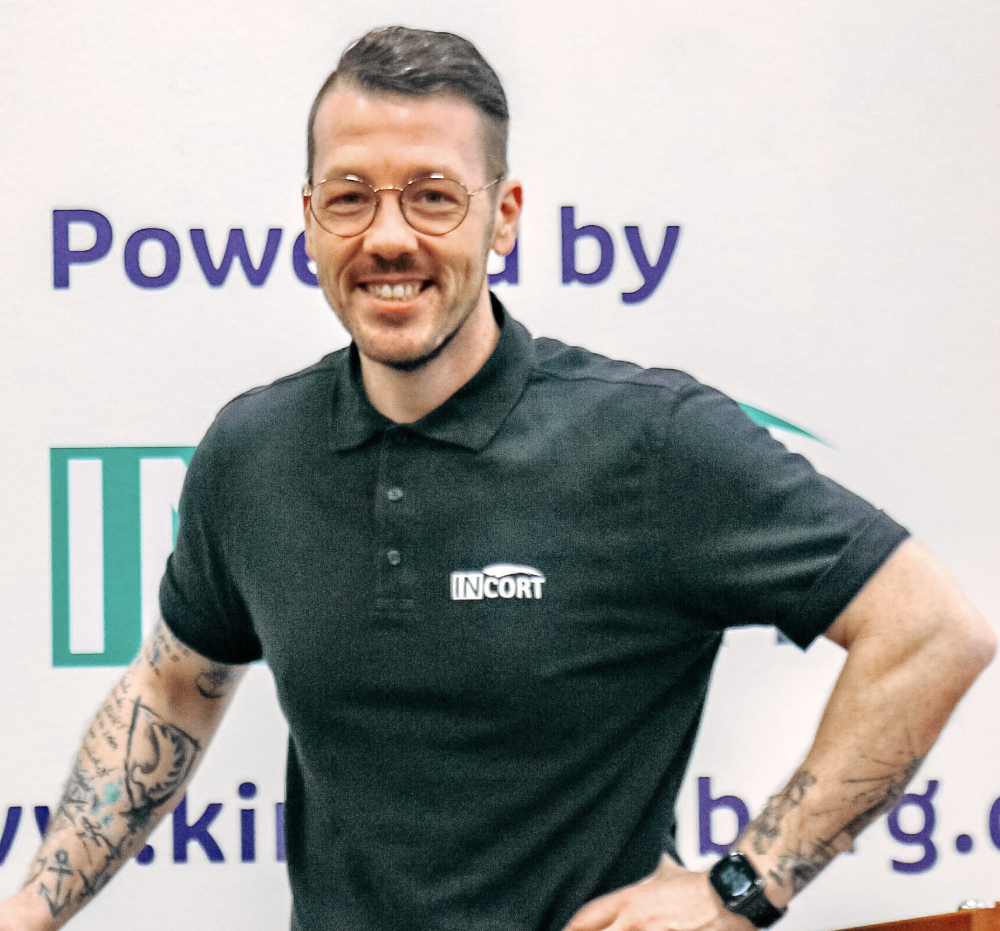
"My wife would say,
I work too much,
and some days are really long.
But when the kids need me,
I'm there!"
1. who are you?
Please introduce yourself briefly:
Who are you - and how did you get into the medical supply industry?
Hi, I'm Jan, 37 years young and the father of two kids. I'm a workaholic, passionate craftsman and motorcyclist.
I've been working in the children's rehab sector for 16 years now. After completing my apprenticeship as an automotive mechatronics technician in 2008, I worked a lot with children with disabilities during my social year.
At the time, I thought that wheelchairs somehow have 4 wheels and brakes ☺. I'm the classic career changer that we often encounter in our industry, which is what makes it so versatile.
I quickly realized that rehab is much, much more than "just" wheelchairs.
What appealed to you most about working with children and their families?
With "our" families, it's about much more than "just" the aids. It fascinates me that I and my team can help the families to lighten their backpack of tasks. And to utilize all the possibilities we have for the families.
Was there an encounter that changed your view of this work?
Yes, when I had to care for a girl with an electric wheelchair. Why was that? Because other customers in the village asked me afterwards whether I already knew the "new girl". She wasn't a new arrival. She had been living there for some time. The care now enabled her to explore her surroundings and run errands independently.
2. everyday work & motivation
What does a typical day look like for you at the medical supply store?
Fortunately, every day is different. I love the variety that comes with my job. I make my appointments myself, so I always know roughly how much time I have to plan for an appointment and don't have the pressure of a predetermined route plan. In the end, that's what makes our work so good. The fact that we can take time to listen.
I spend the rest of my time creating concepts for supplies and developing new ideas "for you" with my colleagues.
What do you enjoy most about your work?
It's nice when you deliver an aid and everything fits. For example, when a wheelchair is delivered and no screws need to be loosened. And the little one can start using it straight away. This can sometimes be a bit overwhelming for parents, especially if it's their first wheelchair and their child decides for themselves where they want to go ☺.
What is particularly challenging in everyday life?
The challenge sometimes lies in reconciling the ideas of many people involved. And then getting the care concept approved, including with reasons for each item, in order to pick up the case worker from the health insurance company.
The bureaucratic effort has increased a lot in recent years, especially in the case of complex care, sometimes many parties are involved.
Is there a situation that has stayed with you to this day?
A boy and his family who were torn from their "normal" life overnight due to his illness. We have been able to accompany and support them to this day.
3. behind the scenes of care
How do you provide medical aids?
When we are asked to provide a fitting, it's not just a question of who has the fastest time, but also who lives near the customer. In order to be able to quickly schedule appointments and be there when you need us.
We offer the customers to come to us, in our children's center we always have about 70 different aids. But we also drive to the customers/children's homes or daycare centers/schools. Just wherever we are needed.
What is particularly important to you personally?
Our colleagues are always customer-facing, i.e. they do everything at the customer's premises, from advice to delivery with adjustment. Even small repairs afterwards or regular checks. That creates trust.
It is important that we try out every aid if possible.
This is important so that everyone gets an impression of the aid and can make a decision: Is the idea of the fitting also the right one, or do we perhaps need to rethink it.
If an approval takes too long, we always take another look at the child before the final order and check everything.
Where in the process do you need a lot of patience?
The processes leading up to approval, queries from health insurance companies or the MD are sometimes very time-consuming and complex.
Is there anything that parents often don't know?
We always have to pick up the parents and be transparent. Explain everything to them as best we can. They don't have to understand it in detail, but they need to know roughly which steps are coming and when, and always be involved. For example, why it's not always a new aid, but can sometimes be a refurbished used aid.
What role does teamwork play for you?
It doesn't work without a team with structures. Not just in terms of the internal supply process. We also support each other when a colleague needs a solution for a fitting. In the field service office, we often think out loud and the solution or a possible idea comes from the other corner.
Briefly asked:
Office or field service?
Field service!
Listening or explaining?
Listening!
What gives you strength in everyday life?
The passion for what we do!
4. team & philosophy
What makes your team special?
The different people who make up my team. That's what makes it special. We are a diverse team of therapists, career changers, orthopaedic technicians/masters, assistants and we all have the same passion to offer our customers the best possible care.
How would you describe your attitude?
We always try to make sure that the aids fit the current or upcoming life situation. When a child leaves kindergarten and starts school soon, what will they need? Which school will it go to? Do they know the resources?
What do you sometimes laugh about as a team?
When the little one runs away from their parents with their new wheelchair or bike because they can do it now. And that means a bit of normality in everyday life again.
5. personal view
Is there an assistive device that has particularly stuck in your mind?
Basically, I think all aids that make everyday life easier are important. For the little ones, it is perhaps the therapy chairs, especially at the beginning, which on the one hand enable the children to sit on their own but also relieve the moms and dads, for example by allowing them to eat together at the table in a relaxed manner.
What does your work mean to you personally?
My wife would say I work too much, and some days are really long. But when the kids need me, I'm there!
It takes a lot of planning to get everything under one roof. In a way, we grow up with the children, learn from them and develop with them. Trust is an important building block in our work.
It makes the work fulfilling. Seeing that the hours of work always pay off in the end. Seeing the children's faces light up and the parents say thank you.
6. outlook & message
How do you see the future of assistive technology for children?
The scope of the provision of assistive technology is increasingly being called into question.
More trust should be placed in us as professionals and in the supply team, who also invest a lot in further training and certificates.
What changes would you like to see in the industry?
Old structures should be broken up and rethought to see whether they still meet today's requirements for the provision of assistive technology.
What advice would you like to give parents?
Check every option carefully, but always trust your instincts.
Thank you very much, dear Jan,
for your openness,
your honest look behind the scenes
and the insights into a job
that goes far beyond technology.
🧡