FiNiFox asks
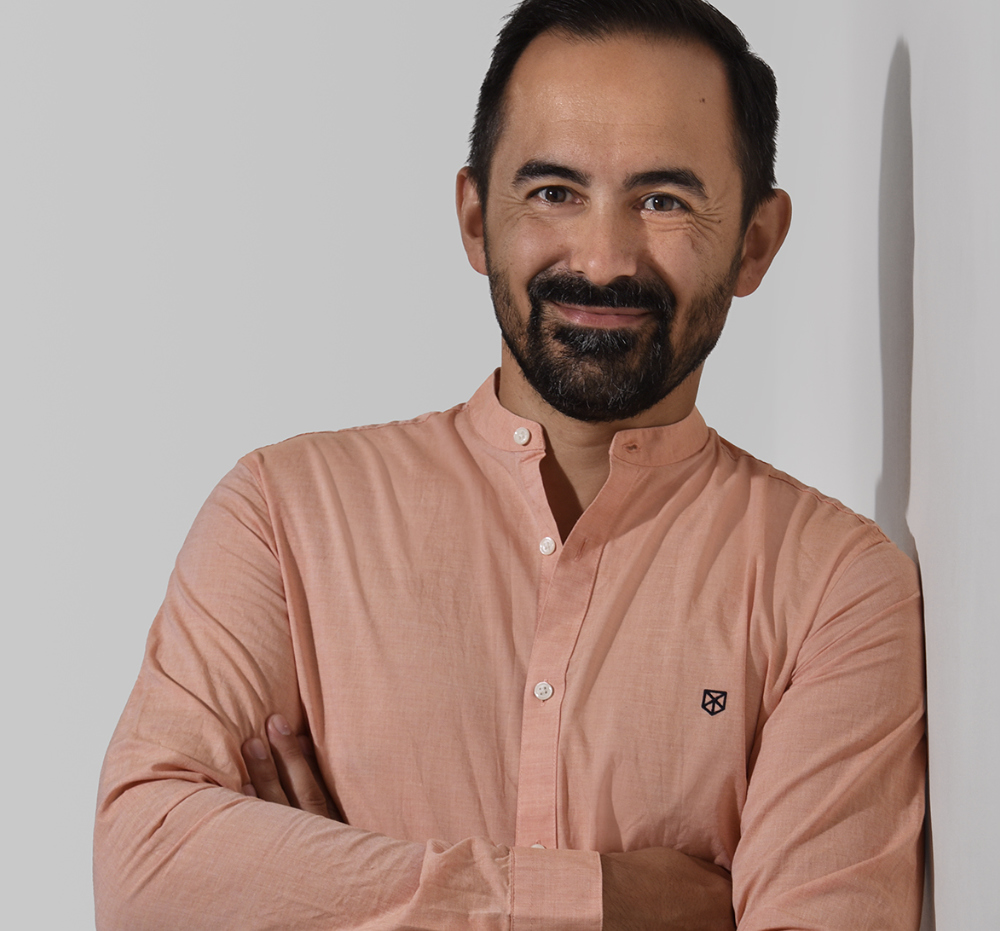
In conversation with Dennis Bolm from Invent Medical about innovation, humanity and the future of modern pediatric aids.
"Quality before price,
if the product has better
features and
quality of life
has a more positive impact."
1. who are you?
Please introduce yourself briefly: Who are you - beyond your title and function?
My name is Dennis Bolm and I'm from Braunschweig. Dennis is enough for me, though, as I prefer to communicate on a first-name basis. 😊
How did you get into the world of children's aids?
I don't know if you get into the world of children's aids specifically. As an orthopaedic technician, you have to deal with everyone in your career and depending on which station you arrive at, there is a specific clientele. I'm quite pragmatic, but I don't have much to do with patients as such.
Was there a moment or a person that had a particular impact on you?
In terms of orthopaedic technology, the most memorable moment is probably when you build your first fitting yourself during your training and then see people walking with it. In terms of my current position, there were several factors. But that would go beyond the scope of this interview 😉
What often surprises people when they get to know you better?
I've never asked anyone that. 😊 But based on what I hear, am told and experience: that I'm a pretty approachable person and easy to deal with, which can come across quite differently at a distance if you see me at the "wrong" moment. I'm actually pretty sure of that. But I prefer and try to live more humanity in my life. Connections are more important than distance and professionalism. At least outside the industry.
2. your path & your motivation
Why do you do what you do?
There's still room to expand a little! I live and love progress, technology, process optimization, trying out new things, personal responsibility, flexibility and straightforwardness. With all these qualities, you quickly reach your limits in a traditional workshop, which is why I had to break out of it and switch to the other side (sales and support).
What specifically motivates you on a day-to-day basis to develop products for children with disabilities?
At Invent Medical, we develop products that should offer added value. With new technologies, we want to push the boundaries of traditional orthopaedic technology much further and create significantly better features than was possible just a few years ago. Improve therapies, make people happier and more mobile.
What values guide you in your work?
Learning, teaching, further development. Staying true to yourself and only doing the things you stand for.
Were there also moments when you doubted - and why did you stay?
Let me put it this way: I'm not married to orthopaedic technology. I have doubted very often in recent years. But there are also simply some points of connection where I have my strengths. And I want to continue to make the most of them. What will the future bring? I'll be surprised.
3. behind the scenes of development
How do you create a new tool - from the initial idea to the finished product?
A lot of evaluations, steps and people are involved.
Who is involved in this process?
Orthopaedic technicians, product designers, software developers, engineers, sales, customers, management, production managers and many more.
What do you attach particular importance to in development and production?
That it is not a copy without real added value. For example, we value function, fit, durability, weight and design. But also affordability. We don't just develop and manufacture for quantity 1, but for quantity infinity. We use our money and skills accordingly.
Which materials or technologies do you use - and why these in particular?
We use industrial 3D printing as much as possible, but no more than is really necessary. We use the HP MJF process, a sintering process. We only use ordinary materials in very small quantities. What others do by hand, we use a fully automated system (an algorithm) at the end of a development and only the final check of production data and the assembly line etc., which no software can do, is carried out manually. We aim for scalability and efficiency.
Is there anything that would surprise parents if they could see how your products are made?
How structured, systematic and elaborate our products are designed and tested. It's not comparable to what a medical supply store does. The focus of a product is always the benefit for the person and the improvement of their care.
What is particularly sensitive or challenging when it comes to aids for children?
Optics, weight and durability immediately spring to mind. Children should be mobile and agile, but at the same time they are not known for being careful and caring with their orthoses, for example. Accordingly, they also have to withstand a lot 😉
Our eyes, or rather the eyes of our parents, are also very careful to ensure that products look beautiful or modern. They should not disfigure their children or make them look restricted. Outsiders should get the impression of an ordinary product and at most say how cool the child looks with it.
Briefly asked:
Perfection or humanity?
Humanity!
Technology or suitability for everyday use?
Technology!
Safety or courage?
Courage!
4. your team & your philosophy
What makes your team special?
That everyone has the idea/impression that we are creating something meaningful and thus having a real positive effect on people's lives. It's not just about sales and profits.
How do you work together?
We are an international team, with the main location and therefore also the head office in Ostrava in the Czech Republic. Our locations in Germany and the USA, as well as our external partners worldwide, are the feelers and arms that enable us to incorporate as many influences as possible into our developments.
What is particularly important to you when dealing with your colleagues?
Having understanding for both sides and continuing to communicate with each other even if there are differences of opinion or you're having a bad day. People are often in different life situations and sometimes have different ideas and interests. In the end, it's important to convey that it's nothing personal.
What do you sometimes laugh about in everyday life?
We often joke about ourselves. About mistakes, clumsiness, speech impediments, the usual stuff. It's teasing, nothing serious. And the good thing about it: everyone who can dish it out can also take it 😉
5. personal view
Do you have a favorite tool from your product world? Why this one in particular?
Definitely our Talee, a product for treating positional deformities of babies' heads. I used to work with it myself as an orthopaedic technician; it was a product that I introduced at a former employer because we were still using an old version. I was one of the very first technicians in Germany to use this helmet. I always enjoyed doing something good for the little ones and being able to have a positive influence on their lives. It certainly moved me too, as I am a father myself.
Can you remember a family or a child for whom this aid has made a difference?
There were just too many. 😊
Is there a tool that you would like to develop because it is missing or could be even better?
Difficult... I can't think of anything off the top of my head.
When you think about the families who use your products: What do you wish for them?
That they are satisfied that we were/are able to help them. That we were also able to relieve them of the old-fashioned fittings that have been available in the same way in medical supply stores for decades. 😊
6. looking ahead & conclusion
How do you see the future of children's aids?
We are constantly working on further developments to become better, faster and more efficient. The more data we receive from fittings, the more we can optimize them. Accordingly, a lot of anonymous data analysis will be involved here in the future, which we should not ignore. This is the only way we can guarantee better care in the future.
Which developments or trends do you think are useful - and which are more critical?
I think developments with added value for patients make sense. What I find critical is that some German companies and tradespeople are deliberately closing their minds to new technologies and manufacturing variants. Purely out of self-interest, without considering the quality of care for patients. I don't like it when further development is not lived and not offered.
What urgently needs to change in the provision of medical aids?
More open communication of the latest care options to patients, therapists and doctors. Coordinated price agreements and product agreements between health insurance companies and guilds. Quality before price, if the product has better properties and has a more positive impact on quality of life.
If you could give something to parents: What is your personal wish or advice?
Always remember that you have the right to choose your healthcare provider. If you don't feel comfortable somewhere or have the impression that you are being taken by surprise, ask another provider. In general, you don't have to accept anything at any clinic just because the clinic wants it that way. The right to choose is almost never mentioned, which means that patients often don't get the care they would have halfway wished for.
Thank you, dear Dennis,
for your openness and
the authentic look
behind the scenes of your work.
🧡