
What is Pitt-Hopkins syndrome?
Pitt-Hopkins syndrome (PTHS ) is a rare genetic disorder caused by a mutation in the TCF4 gene. It is a neurodevelopmental disorder characterized primarily by mental retardation, developmental delays and physical and behavioural abnormalities.
Affected children usually show delayed speech development and motor skills, but often have characteristic facial features that can help with the diagnosis. Common symptoms also include breathing disorders such as hyperventilation and hypoventilation, repetitive movements such as hand flapping, and sometimes epilepsy. Behavioral abnormalities such as anxiety and repetitive behaviors (e.g. repeatedly touching objects) are also common.
The disorder is caused by a change in the TCF4 gene on chromosome 18, and it is usually sporadic, meaning there is no known familial clustering.
There is no cure for Pitt-Hopkins syndrome, but early diagnosis and individual support (e.g. occupational therapy, speech therapy and special support at school) can help to improve the quality of life and promote the development of affected children.
Aids that are frequently used for Pitt-Hopkins syndrome:
Aids and support for everyday life
Specialized aids are essential for children with Pitt-Hopkins syndrome in order to reduce communication barriers and increase motor safety:
- Augmentative and Alternative Communication (AAC): as spoken language is often absent, talkers (speech computers), eye control systems or image-based apps are the most important key to participation. They enable the child to express their wishes and needs.
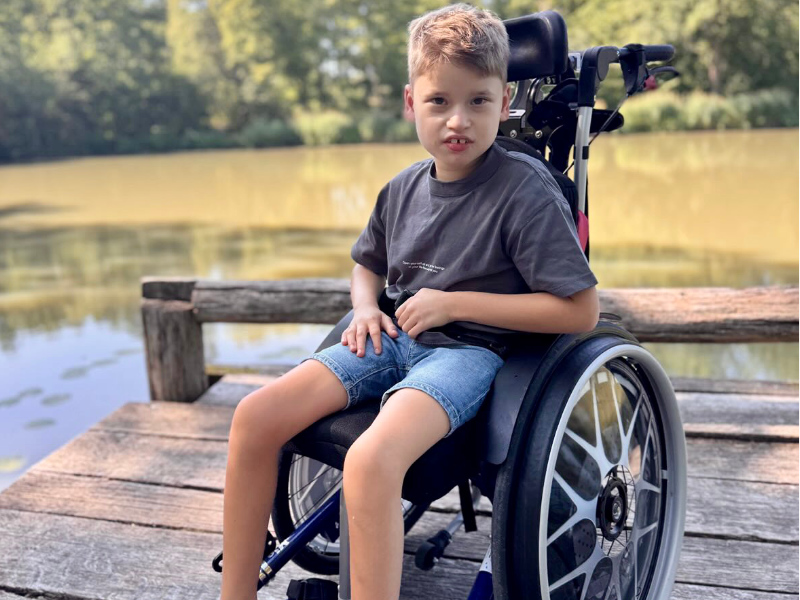
- Mobility & stability: Specialized walkers or rollators help with gait insecurity. For longer distances and for safety during breathing episodes, individually adapted rehab buggies or wheelchairs with stabilizing seat shells are necessary.
- Safety in the event of breathing disorders: In cases where breathing pauses lead to drops in oxygen levels, mobile pulse oximeters for monitoring oxygen saturation can provide safety in everyday life.
- Safety for epilepsy: If seizures occur, safety helmets (if there is a risk of falling) and epilepsy sensor mats for the bed offer important protection at night.
- Sensory stimulation: Sensory aids such as weighted blankets or chew toys (Chewy) help to strengthen self-awareness and positively channel stereotypies.
Learn more
You can find more helpful information about Pitt-Hopkins syndrome here:
www.orpha.net