
What is the SPATA5 gene defect?
The SPATA5 gene defect is a rare genetic disorder caused by mutations in the SPATA5 gene. Affected children usually show severe developmental delays, hypotonic musculature (low muscle tone), epilepsy, speech and movement disorders and sometimes additional problems such as hearing loss.
Aids that are frequently used for the SPATA5 gene defect:
Aids and support for everyday life
As the SPATA5 gene defect affects many areas of development, holistic provision of aids is crucial to enable participation in everyday life:
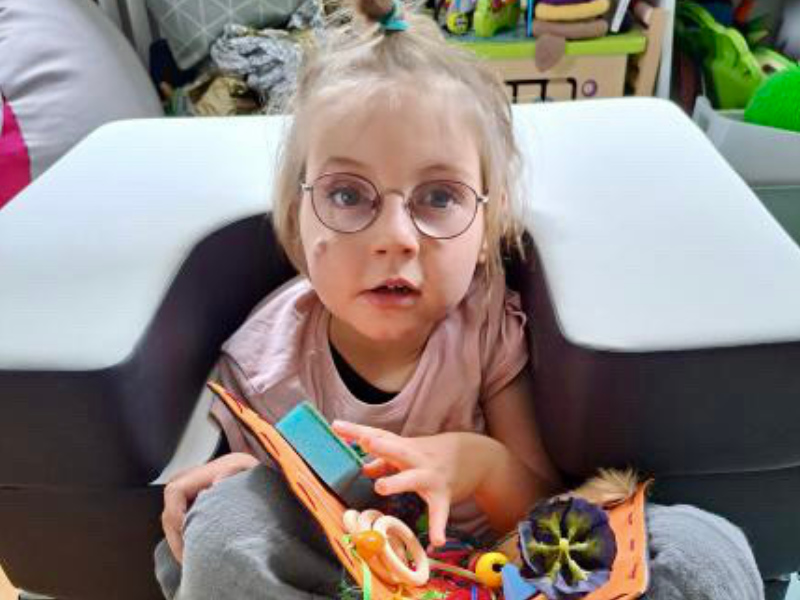
- Stability & positioning: due to the muscular hypotonia, individually adapted therapy chairs or seat shell bases are necessary. These support the trunk and enable a stable head position, which is particularly important for eating and communication.
- Mobility aids: Depending on motor skills, rehab buggies, wheelchairs or specialized standing trainers provide support. Standing trainers also promote bone density and relieve pressure on the internal organs.
- Augmentative and Alternative Communication (AAC): As spoken language is often severely impaired, sign language, symbol-based systems or electronic talkers can help. If hearing loss is also present, communication must be supported visually or tactilely.
- Hearing support: If hearing loss is diagnosed, hearing aids fitted at an early stage or - depending on the findings - cochlear implants (CI) are important in order to promote acoustic perception.
- Safety with epilepsy: To protect the child during seizures, epilepsy sensor mats for the night and padded lying surfaces or protective helmets for the day provide important safety.
Learn more
You can find more helpful information about CDKL5 here:
www.cdkl5-verein.de