
What is Vena Galeni malformation (VGM)?
Vena Galeni malformation (VGM) is a rare congenital vascular malformation in the brain in which the Vena Galeni, a large cerebral vein, is atypically enlarged and directly connected to arteries. This can lead to considerable circulatory problems that cause cardiovascular stress, particularly in newborns. Hydrocephalus, i.e. "hydrocephalus", developmental delays and seizures often occur. The severity of the symptoms can vary greatly, which is why early diagnosis and treatment is crucial for the child's further development.
Aids that are frequently used for Vena Galeni malformation (VGM):
Aids and support for everyday life
Treatment today usually involves embolization (closure of the faulty connection). In addition, affected children often require specialized aids to compensate for the neurological consequences:
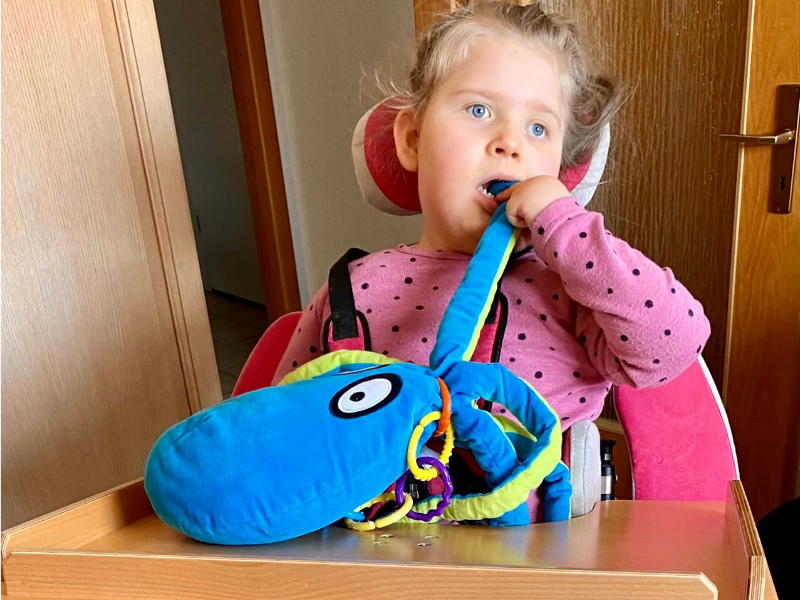
- Positioning & relief: with hydrocephalus, the head is often heavier and the neck muscles are overstrained. Individually adapted therapy chairs or rehab buggies with special headrests provide relief for the cervical spine.
- Mobility aids: If there are motor impairments, walking aids or wheelchairs support independence. Good shock absorption is important here to avoid jolting the head.
- Safety with epilepsy: If seizures occur, epilepsy sensor mats for the night and safety helmets for the day provide important safety.
- Monitoring the cardiovascular system: Mobile pulse oximeters can help parents to keep an eye on the child's oxygen saturation and pulse, especially if there is cardiac stress.
- Early intervention & sensory aids: To counteract developmental delays, tactile play materials or visual aids help to stimulate the senses in a targeted manner.
Here you will find further helpful information about Vein of Galen Malformation:
Vein of Galen Malformation Switzerland