
What is 5p syndrome (cri-du-chat syndrome)?
5p syndrome, also known as cri-du-chat syndrome, is a rare genetic disorder caused by the loss (deletion) of a piece on the short arm of chromosome 5. The name ("cat crying syndrome") comes from the typical high-pitched cry of affected babies, which is reminiscent of a cat meowing.
Children with 5p syndrome usually show developmental delay, mental retardation, low muscle tone (hypotonia) and characteristic facial features such as a round face, wide-set eyes and low-set ears. Feeding and speech difficulties and motor problems are also common.
Aids that are frequently used for 5p syndrome (cri-du-chat syndrome):
Aids and support for everyday life
In order to promote independence and master motor challenges, targeted aids play a central role in 5p syndrome:
- Augmentative and Alternative Communication (AAC): as language development is often the biggest barrier, signs, symbol cards or electronic talkers (speech computers) are crucial to reduce frustration and enable participation.
- Mobility & stability: In the case of muscular hypotonia, individually adapted rehab buggies, wheelchairs or special walking aids can help. These provide the necessary support and promote active movement.
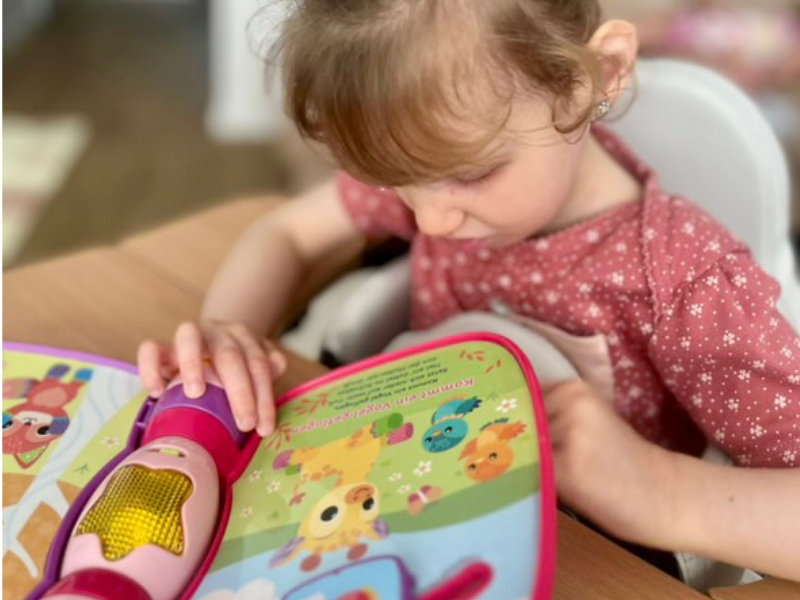
- Positioning for eating & learning: A stable therapy chair with pads to support the trunk helps the child to maintain an upright position, which also makes swallowing safer.
- Sensory integration: Many children with 5p syndrome benefit from sensory aids such as weighted blankets or special positioning cushions, which help them to become more aware of their own body and calm down.
- Teething and chewing aids: In cases of motor restlessness or for oral stimulation, special chewing aids (e.g. teething necklaces) can help to reduce tension.
Learn more
You can find more helpful information about 5p syndrome here:
5p-syndrom.de