
What is Aicardi syndrome?
Aicardi syndrome is a rare genetic disorder.
Typical characteristics are
- Malformation of the brain: so-called corpus callosum agenesis (the connecting piece between the two halves of the brain is completely or partially missing).
- Epileptic seizures (usually already in infancy, often difficult to treat).
- Eye abnormalities (e.g. typical retinal changes called "chorioretinal lacunae").
- Developmental delays, muscle stiffness, curvature of the spine (scoliosis) or problems with vision and body control are also common.
Cause:
The exact genetic cause is not yet fully understood. A mutation on the X chromosome is suspected. As boys only have one X chromosome, the syndrome is not compatible with life in boys in most cases - which is why almost exclusively girls are affected.
Aids that are frequently used for Aicardi syndrome:
Aids and support for everyday life
The provision of aids for Aicardi-Goutières syndromeaims to increase neurological safety and stabilize posture:
- Safety in epilepsy: due to seizures often being difficult to control, epilepsy sensor mats for night-time monitoring and protective helmets for daytime use are essential.
- Stability & positioning: Due to the tendency towards scoliosis and impaired body control, individually adapted seat shells or therapy chairs are essential. They support the spine and prevent a deterioration in posture.
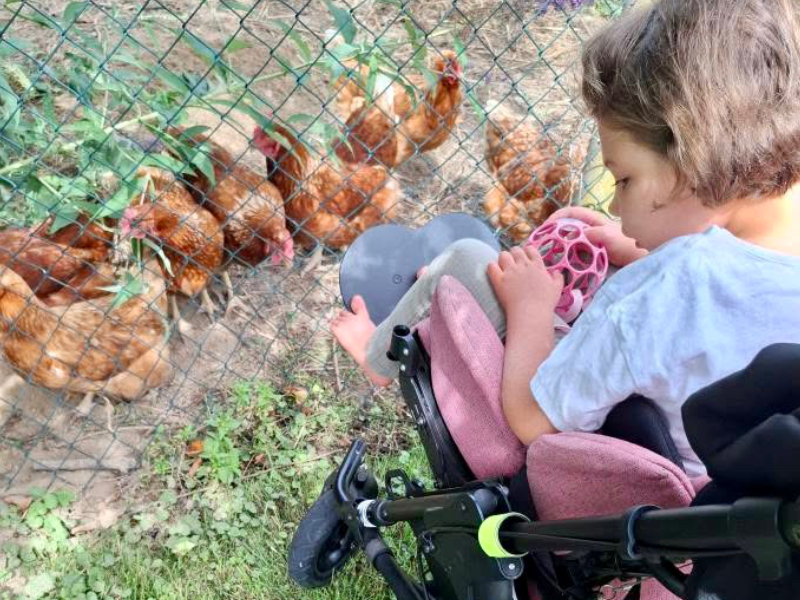
- Mobility aids: Specialized rehab buggies or wheelchairs with stabilizing headrests enable participation in social life and provide space for necessary medical accessories.
- Positioning systems: Special positioning cushions or mattresses help to keep the body in a stable, pressure-free position at night and relieve pressure on the spine.
- Visual stimulation: In the case of severe visual impairment, toys with high contrasts, light elements or tactile aids can promote perception.
Learn more
You can find more helpful information about Aicardi syndrome here:
www.orpha.net