
What is the SCN8A gene defect?
The SCN8A gene defect is a rare genetic disorder caused by mutations in the SCN8A gene. This gene codes for a voltage-gated sodium channel (Nav1.6), which is important for electrical signal transmission in the brain.
Changes in the SCN8A gene can lead to epilepsy with difficult-to-treat seizures, which usually begin in early childhood. Many children also show developmental delay, impaired motor skills, muscle hypotonia or spasticity and sometimes cognitive impairment.
The course of the disease varies greatly: some children have a rather mild form, others are severely affected and require extensive therapeutic support.
Aids that are frequently used in the SCN8A gene defect:
Aids and support for everyday life
Since epilepsy and motor instability determine everyday life, proactive provision of assistive devices is crucial for children with SCN8A gene defects:
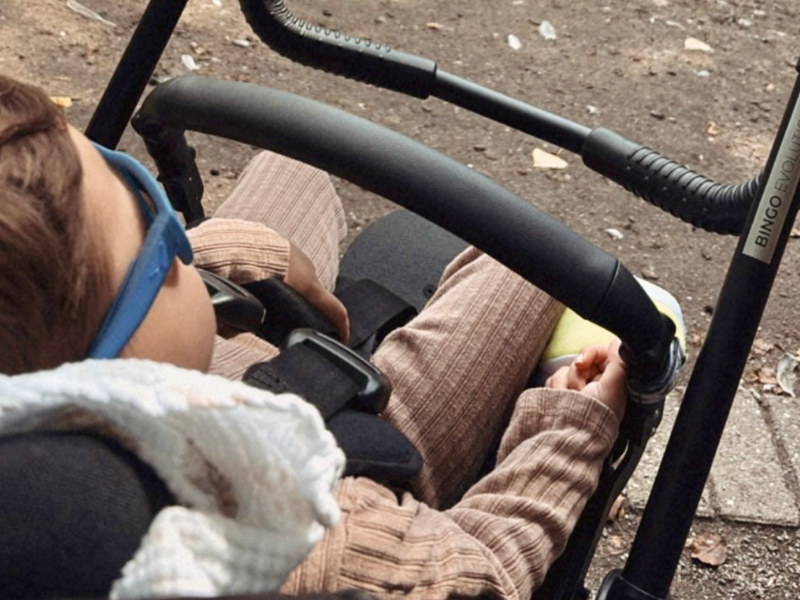
- Safety during seizures: To prevent injuries during unpredictable seizures, safety helmets for daytime and specialized epilepsy sensor mats for nighttime are important companions. These sound the alarm when rhythmic seizure movements are detected.
- Mobility & positioning: In the event of fluctuating muscle tone or spasticity, individually adapted rehab buggies or wheelchairs provide support. A stable therapy chair enables a safe sitting position when eating and playing and relieves the trunk muscles.
- Walking and standing aids: In order to promote mobility and prevent contractures, baby walkers or standing trainers are often used. These stabilize the joints and promote self-awareness.
- Augmentative and Alternative Communication (AAC): As speech development is often delayed, talkers, tablets with communication apps or simple buttons help the child to communicate.
- Safe sleeping: Specialized children's care beds with padding and high bars offer protection during night-time seizures and make daily care easier for parents.
Learn more
You can find more helpful information about SCN8A here:
scn8a.de